

8 Best Signs Your Battery Is Failing

That flat, hesitant start first thing in the morning is often where the trouble begins. One of the best signs your battery is failing is when your car still starts, but it sounds slower, weaker or less certain than it used to. Leave it too long and what feels like a minor nuisance can turn into a no-start in your driveway, at the shops or in a work car park.
A failing battery does not always die all at once. In plenty of cases, it gives you a few warnings before it gives up completely. Knowing what to look for can save you stress, help you avoid a tow, and stop you replacing the wrong part when the real issue is battery-related.
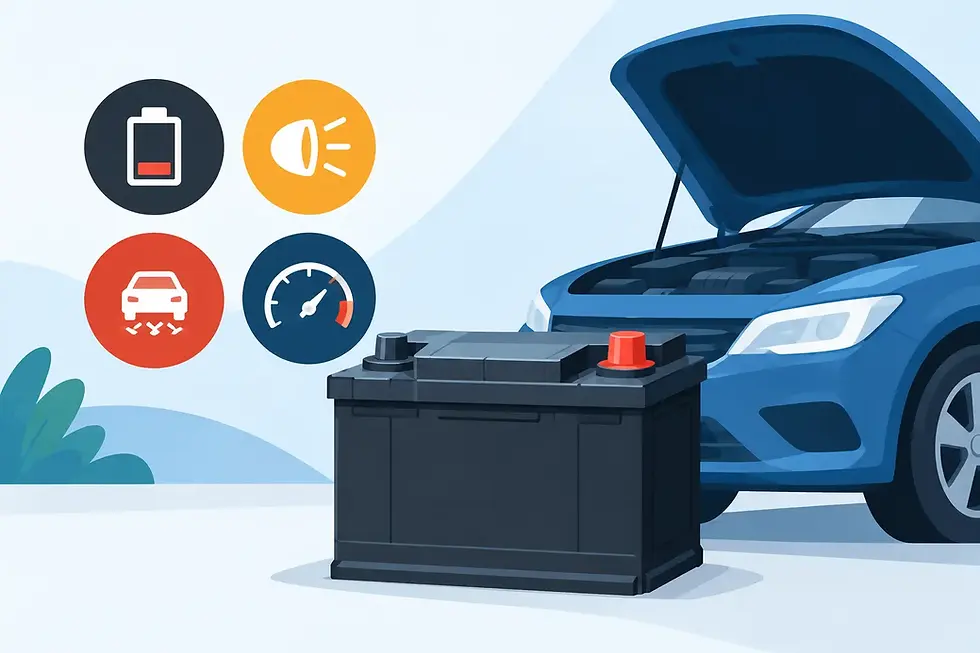
The best signs your battery is failing
1. The engine cranks slowly
This is usually the first sign drivers notice. You turn the key or press the start button, and the engine labours before it fires. Instead of a clean, confident start, it sounds sluggish.
That slow crank can happen because the battery no longer has enough reserve power to spin the starter motor properly. Cold mornings can make it more obvious, but in Newcastle conditions, a weak battery can show up any time of year. If the car starts normally one day and struggles the next, the battery is worth checking before you assume it is something else.
2. You need a jump-start more than once
A one-off flat battery does not always mean the battery itself has failed. You might have left the interior light on, not shut a door properly, or had the car sitting too long without being driven. But if you have needed a jump-start more than once in a short period, that is a red flag.
A healthy battery should recover and hold charge properly after normal use. If it keeps going flat, it may be at the end of its life. That said, this is one of those situations where it depends. Repeat flat batteries can also point to a charging problem, a parasitic electrical draw, or an alternator fault. That is why proper testing matters.
3. Dash lights and electrical features seem weak
Modern cars rely on stable battery voltage to run far more than just starting. If your dash lights flicker, the headlights look dim at idle, or features like power windows, infotainment or central locking start behaving oddly, battery condition could be part of the problem.
Drivers often notice these issues in bits and pieces. Maybe the radio resets itself, the screen takes longer to load, or the windows move more slowly than usual. Electrical faults can come from a few places, but a weak battery is one of the most common starting points and one of the easiest to test.
4. The battery warning light comes on
If the battery light appears on the dashboard, do not ignore it. Despite the name, this warning light does not always mean the battery alone is faulty. It can also indicate the charging system is not doing its job.
In practical terms, that means the battery may not be receiving enough charge from the alternator while you drive. You might still get a few starts out of the car, or it might stop unexpectedly once the battery voltage drops too far. Either way, this is one sign that needs checking sooner rather than later.
Other signs your car battery may be near the end
5. There is a clicking sound but no start
If you turn the key and hear clicking, or just a single click, the battery may not have enough power to engage the starter motor properly. This is a common symptom of low voltage.
It is not the only possible cause. Starter motor faults, poor cable connections and terminal corrosion can produce similar symptoms. But from a driver’s point of view, clicking without starting is one of the more obvious warnings that the battery or its connections need attention.
6. The battery case looks swollen or damaged
Sometimes the warning is visible before it is mechanical. If the battery casing looks bloated, cracked or misshapen, that battery should be inspected and usually replaced.
Heat is hard on batteries, and under-bonnet temperatures can shorten battery life over time. A swollen case often means the internal components have been damaged. At that point, it is not just a reliability issue. It is a safety and durability issue as well.
7. There is corrosion around the terminals
White, blue or greenish build-up around the battery terminals is another sign not to brush off. Corrosion can interfere with the battery’s ability to deliver power cleanly, and it can create starting issues even if the battery itself still has some life left.
Sometimes cleaning the terminals and testing the system will sort out the immediate problem. Other times, corrosion is just one symptom of an ageing battery that is already on the way out. The key point is that clean, secure connections matter, and they should be checked properly rather than guessed at.
8. The battery is simply getting old
Batteries are wear-and-tear items. They do not last forever, and age alone is one of the best signs your battery is failing or close to failing. Many standard car batteries last around three to five years, but that range can shift depending on driving habits, climate, vehicle electronics and battery quality.
Short trips are particularly hard on batteries because the car uses a decent amount of power to start, then may not run long enough to fully recharge. If your vehicle does mostly school runs, quick errands or stop-start commuting, battery life can be shorter than expected.
Why battery problems are easy to misread
A lot of symptoms that look like battery trouble can overlap with other faults. A slow start might be the battery, but it could also be a starter motor drawing too much current. A battery warning light might point to the alternator. Electrical glitches can come from poor earths, wiring issues or control module faults.
That is why replacing the battery on guesswork is not always the cheapest option. If the battery is tested and found to be healthy, but the alternator is not charging properly, fitting a new battery will not solve much for long. Good diagnosis saves money and avoids repeat breakdowns.
When to stop driving and get it checked
If the car is still starting but showing one mild symptom, you may have a bit of time to book it in. If you are seeing multiple signs at once - slow cranking, warning lights, flickering electrics, or repeat jump-starts - it is better not to push your luck.
The reason is simple. Batteries often fail at the least convenient moment. That can mean being stranded before work, stuck after school pickup or left waiting in a shopping centre car park. Getting it tested early is usually quicker and cheaper than dealing with a breakdown later.
What a proper battery check should include
A proper check goes beyond putting a charger on it and seeing if the car starts. The battery should be tested for condition and charge capacity, the terminals and cables inspected, and the charging system checked to make sure the alternator is doing its job.
For some vehicles, battery replacement also needs to be done correctly so the electrical system continues to operate as it should. Newer cars can be more sensitive to voltage issues than older ones, and using the wrong battery specification can create more problems than it solves.
At Scott Forbes Automotive, this is handled the straightforward way - test the battery, check the charging system, confirm the fault, and fit the right replacement if needed. That approach matters whether you drive a daily commuter, family SUV or a 4WD that needs dependable starting power every time.
A practical way to avoid being caught out
If your battery is more than a few years old and the car has started to feel just a little slower or less consistent, do not wait for a complete failure. Battery problems rarely improve on their own.
A quick check now can save you from a much bigger inconvenience later. If your car is giving you any of these signs, the smart move is to have it tested before it decides for you.
Comments