
Do EVs Need Servicing? Yes - Here’s Why

Plenty of drivers assume that once they switch to electric, servicing more or less disappears. It’s easy to see why. If there’s no engine oil, no spark plugs and no exhaust system, do EVs need servicing at all? Yes, they do - just not in the same way as a petrol or diesel vehicle.
That difference matters, especially if you want to keep your EV safe, reliable and covered under warranty terms. Electric vehicles generally have fewer moving parts, but they still rely on brakes, tyres, suspension, steering, cooling systems, software and high-voltage components that need proper inspection. Ignore those, and an EV can still become expensive, unsafe or inconvenient to own.
Do EVs need servicing if there’s less to maintain?
The short answer is yes. The more accurate answer is that EV servicing is usually simpler, but it is not optional.
A conventional car has many routine service items tied to the engine and transmission. That includes oil and filter changes, timing components on some models, fuel system maintenance and a longer list of wear points linked to heat and combustion. An EV removes a lot of that. What it does not remove is the rest of the car.
You still have tyres carrying significant vehicle weight. You still have brakes that can corrode or wear, even with regenerative braking doing part of the work. You still have suspension bushes, shock absorbers, steering components, cabin filters, coolant on many models and electrical systems that need inspection and testing.
Servicing is also about picking up problems early. A tyre wearing unevenly, a cooling fault, a noisy wheel bearing or a charging issue is usually cheaper to deal with before it turns into a bigger repair.
What gets checked during EV servicing?
This depends on the make, model and service schedule, but most EVs still follow a routine inspection plan. Some items are checked every visit, while others are replaced at longer intervals.
Tyres, wheels and alignment
EVs are often heavier than equivalent petrol cars because of the battery pack. They also deliver torque instantly, which can wear tyres faster than some owners expect. That means tyre condition, pressures and tread wear deserve close attention.
If an EV is wearing tyres unevenly, it may point to alignment or suspension issues. Leaving that too long can shorten tyre life and affect how the vehicle handles, especially in wet conditions.
Brakes
A lot of people hear that EV brakes last longer, and often that’s true. Regenerative braking reduces how hard the friction brakes need to work in normal driving. But that can create its own issue. Because the brakes are used less, components can stick, glaze or corrode if they are not inspected regularly.
That’s especially relevant for vehicles doing short local trips or spending time parked outdoors. Brake fluid also still needs attention, because moisture contamination remains a factor whether the car is electric or not.
Suspension and steering
Potholes, kerbs and rough roads around Newcastle suburbs affect EVs just like any other vehicle. Suspension joints, bushes, struts, steering arms and related components wear over time. If they’re left unchecked, you can end up with poor handling, uneven tyre wear or unnecessary stress on other parts.
Battery health and high-voltage systems
The traction battery is the part most owners worry about, but it is not usually something that gets "serviced" in the traditional sense. It does, however, need monitoring. Fault codes, charging behaviour, cooling performance and system health checks can all be part of proper EV maintenance.
High-voltage components must be handled correctly and safely by technicians with the right training and procedures. This is not an area for guesswork.
Coolant and thermal management
Many EVs use cooling systems to regulate battery and power electronics temperature. That system may include coolant, pumps, hoses and heat exchangers. Depending on the manufacturer schedule, coolant may need inspection or replacement at set intervals.
If a thermal management system is not operating properly, battery performance and long-term durability can suffer.
Cabin filters, 12-volt battery and general safety checks
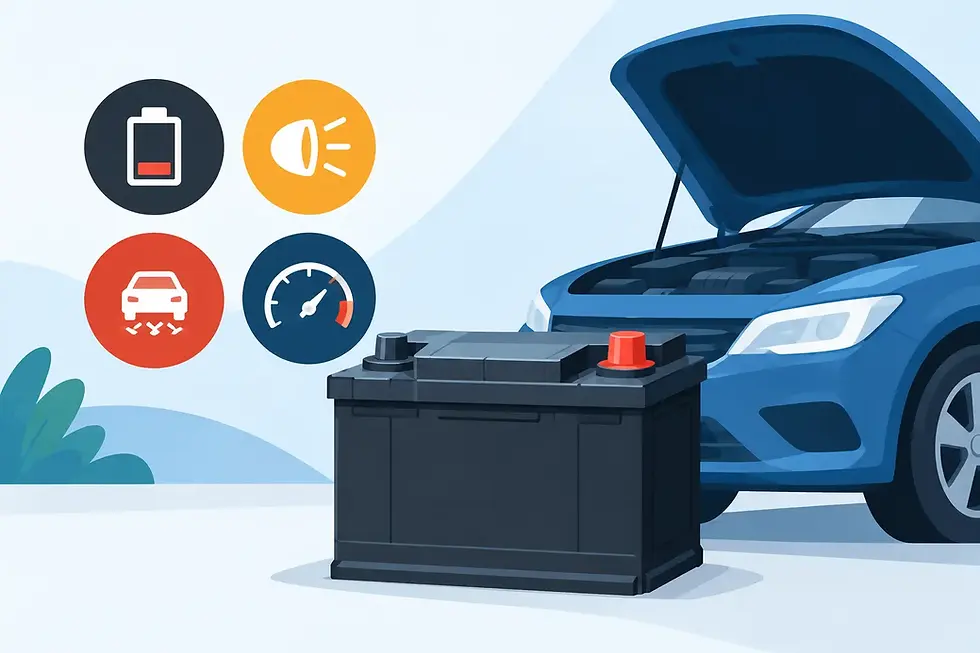
EVs still have cabin air filters that clog over time, especially if the car is driven in dusty conditions or heavy traffic. Most also use a 12-volt battery to run lower-voltage systems, and that battery can fail just like one in a conventional car.
General servicing can also include checking lights, wipers, washer operation, fluid levels where applicable, underbody condition and software or system alerts.
Why skipping EV servicing can cost more later
One of the biggest traps with EV ownership is assuming less maintenance means no maintenance. In reality, small faults can be missed because the car often feels smooth and quiet even when something is starting to go wrong.
A worn suspension bush does not announce itself the same way a rough-running engine might. A brake issue can build slowly. A tyre alignment problem might only show up once a costly set of tyres is half worn out.
There is also the warranty side of it. If your vehicle has a manufacturer service schedule, following it matters. Log book servicing completed to the required standard helps protect your statutory warranty rights and gives you a clear maintenance history, which is useful for resale as well.
Do EVs need servicing as often as petrol cars?
Usually, no. Many EVs have longer intervals and fewer scheduled replacement items than petrol vehicles. That can mean lower ongoing servicing costs over time.
But longer intervals should not be confused with a licence to wait until something feels wrong. Service timing still depends on manufacturer requirements, kilometres travelled, driving conditions and the age of the vehicle. A car doing school runs and stop-start commuting around Wallsend may have different wear patterns from one spending most of its time on open roads.
Used EVs also deserve a bit more care. If you’ve bought second-hand, or you’re not sure how the previous owner maintained it, a proper inspection can give you a much clearer picture of tyre wear, brake condition, underbody damage, suspension wear and any obvious battery or charging concerns.
The difference between EV servicing and EV repairs
It helps to separate routine servicing from fault diagnosis and repair.
Servicing is the regular scheduled work that keeps the vehicle in good order and helps catch developing issues early. Repairs come after a problem appears, whether that’s a warning light, charging fault, suspension noise, brake issue or cooling system problem.
The two are connected. A good service can prevent some repairs or at least make them smaller and cheaper. It can also flag issues before they leave you stranded or off the road.
Choosing the right workshop for EV servicing
Not every workshop is set up for EV work, and that matters. Electric vehicles bring different procedures, safety requirements and diagnostic needs compared with standard petrol and diesel cars.
The right workshop should be able to carry out scheduled servicing properly, explain what your car actually needs and avoid padding the job with unnecessary extras. That’s particularly important with EVs, because there’s still plenty of confusion in the market. Some owners are told their car barely needs any attention, while others get sold generic maintenance that doesn’t fit the vehicle.
What you want is straightforward advice, qualified technicians and servicing that matches the manufacturer requirements where applicable. If the car needs a routine inspection, say so. If a component is worn, show it. If something can wait, be honest about that too.
For local drivers, that practical approach matters more than buzzwords. Whether it’s an EV, a family SUV or a work ute, the job is the same - keep the vehicle safe, reliable and worth owning.
So, do EVs need servicing?
Yes, without question. They need less routine maintenance than many petrol or diesel vehicles, but they are still complex machines with tyres, brakes, suspension, cooling systems, electronics and safety systems that wear and age over time.
At Scott Forbes Automotive, that’s how we look at EV servicing - no fuss, no scare tactics, just the checks and maintenance your vehicle actually needs. If you stay on top of it, your EV is far more likely to stay efficient, safe and trouble-free. And if you’re ever unsure whether your electric vehicle is due, it’s better to ask early than fix a preventable problem later.
Comments