
How to Diagnose Clutch Slipping in Your Car
- Scott Forbes
- Jul 31
- 5 min read
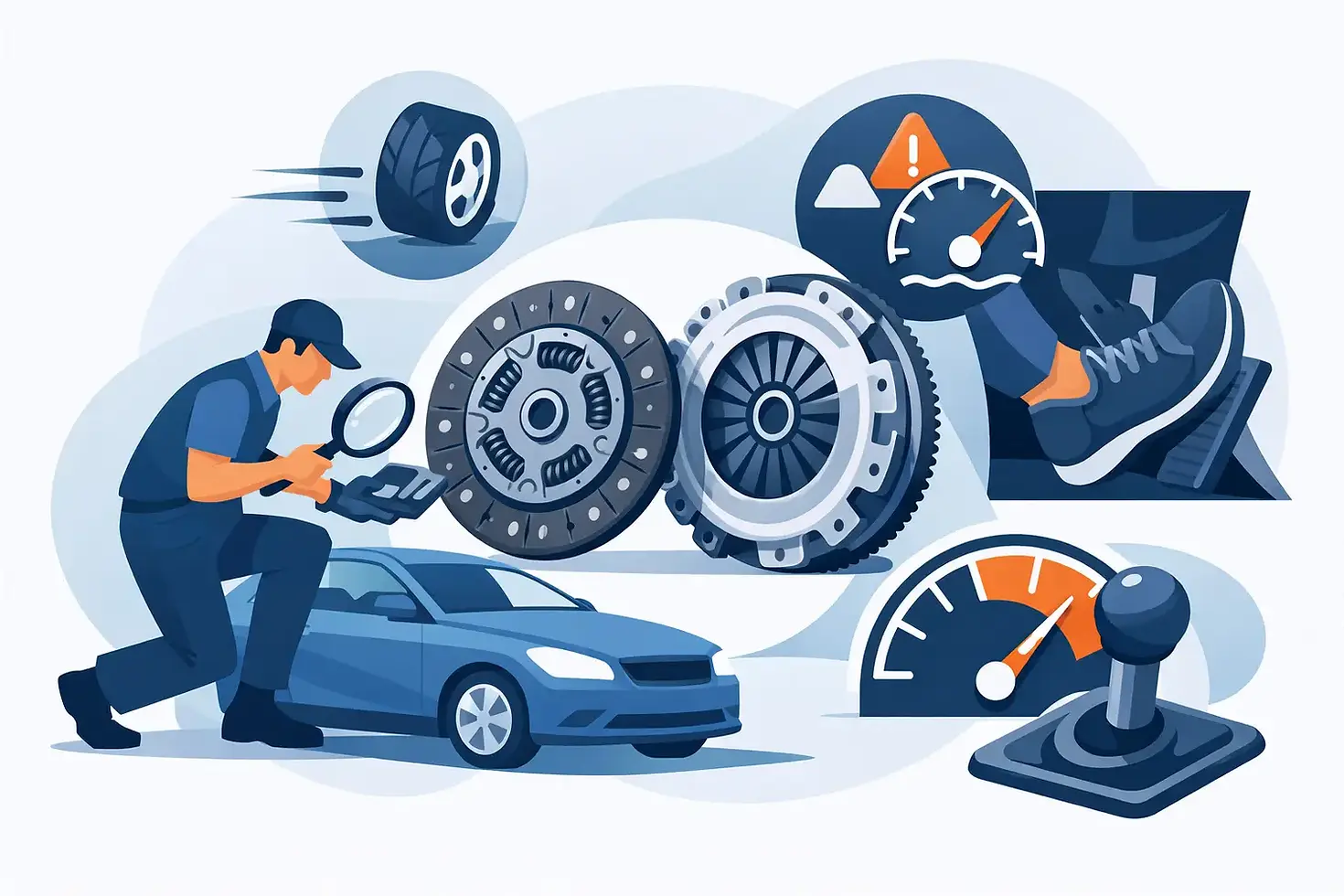
A clutch that is starting to slip can turn a normal drive up to the freeway, through Wallsend traffic or while towing into a frustrating and expensive problem. Knowing how to diagnose clutch slipping early may help prevent further damage and gives your mechanic a clearer picture of what the vehicle is doing.
Clutch slip is most common in manual vehicles. It occurs when the clutch disc cannot hold the engine and gearbox together firmly enough under load. The engine revs rise, but the vehicle does not accelerate at the same rate. It is not a fault to ignore. Continued driving can overheat and damage the clutch disc, pressure plate and flywheel, increasing the scope of repairs.
What clutch slipping feels like on the road
The clearest sign is a mismatch between engine speed and road speed. You may press the accelerator in a higher gear and see the revs climb quickly, yet the car feels slow to pick up. This is particularly noticeable when overtaking, climbing a hill, carrying passengers or towing a trailer.
In a healthy manual car, selecting a gear and applying power produces a direct response. With a slipping clutch, the engine can sound as though it is working hard while the vehicle hesitates. The problem may only happen under heavier throttle at first, then become more frequent as the clutch wears further.
A burning smell is another common warning. An overheated clutch can produce a sharp, acrid smell after hill starts, heavy traffic, reversing a trailer or a hard acceleration. One brief smell after an unusual manoeuvre does not automatically mean the clutch has failed. If it returns during ordinary driving, arrange an inspection.
You might also notice that the clutch pedal engagement point has changed. A clutch that bites very high in the pedal travel can be worn, although pedal position on its own is not a reliable diagnosis. Some vehicles have hydraulic or self-adjusting clutch systems, and their normal pedal feel differs between makes and models.
How to diagnose clutch slipping safely
There are a few sensible observations you can make before booking in. They should be done on a quiet, flat road in safe conditions, not in busy traffic or on a steep hill. Avoid repeated testing, because deliberately making a clutch slip creates heat and can worsen an already worn component.
Check revs against acceleration
Drive at a steady speed in a higher gear, such as fourth or fifth where road conditions allow. Apply moderate acceleration. If the rev counter rises noticeably before vehicle speed follows, clutch slip is likely. In a vehicle with an automatic transmission, a similar sensation may point to a different transmission fault, so do not assume it is a clutch issue.
Be aware of normal gearbox behaviour. A manual vehicle will naturally feel less responsive in a high gear at low revs. The concern is not simply slow acceleration. It is an obvious surge in revs with little matching forward movement.
Notice when it happens
Make a note of the conditions that bring on the issue. Does it occur only when the car is loaded, when climbing hills, after the vehicle has warmed up, or in a particular gear? Does it happen during every drive or only after stop-start traffic? These details help separate clutch wear from engine, gearbox or driveline issues.
A slipping clutch often begins under heavy load because that is when the clutch has to transfer the most torque. If the fault progresses to normal, gentle acceleration, the vehicle should be checked soon rather than driven until it cannot move reliably.
Look for related changes, but do not pull parts apart
Check whether there are leaks under the vehicle or around the bellhousing area. Oil leaking from an engine rear main seal or gearbox input seal can contaminate the clutch disc and cause it to slip. A leak does not confirm the cause, and the clutch components are not accessible without removing the gearbox, but it is useful information to pass on.
Also consider recent work. If a clutch problem began soon after engine or gearbox repairs, a workshop should inspect the installation, hydraulic operation and any possible fluid contamination. If no work has been carried out and the car has high kilometres, ordinary clutch wear is a more likely explanation.
Do not rely on the old handbrake stall test. Forcing the car against the handbrake in a high gear can overheat the clutch and place unnecessary strain on the driveline. It is not needed when the on-road symptoms are clear.
Faults that can feel like a slipping clutch
Not every loss of acceleration is a clutch problem. An engine fault can leave a car flat under load without causing the revs to flare. Fuel delivery problems, ignition faults, blocked intake components and turbocharger issues can all reduce power. In those cases, engine revs generally do not rise freely as they would with a slipping clutch.
A dragging clutch is the opposite problem. It does not release fully, making gears difficult to select, especially reverse or first, and may cause the vehicle to creep with the pedal pressed. A worn clutch can sometimes have both slipping and release issues, but the symptoms and repair checks are different.
Gearbox faults, worn CV joints, transfer case issues in a 4WD, and differential problems can also create noises or poor drive. If you hear crunching, knocking, whining or feel vibration along with the loss of drive, mention it when booking. Accurate diagnosis involves checking the complete driveline rather than replacing parts on guesswork.
Why clutches start slipping
The usual cause is a worn clutch disc. The friction material gradually wears away through normal use, particularly in vehicles used for frequent city driving, hill starts, towing or carrying heavy loads. The life of a clutch varies greatly. A commuter vehicle driven gently on open roads may get far more kilometres from a clutch than a ute that regularly tows tools or a caravan.
Heat is the enemy of clutch components. Riding the clutch pedal, holding a vehicle on a hill with the clutch instead of the brake, or repeated heavy launches can glaze the disc and pressure plate. Once overheated, the clutch may slip even if there is still some friction material remaining.
Other causes include a weak pressure plate, contaminated friction surfaces, incorrect clutch adjustment on older cable-operated systems, or a release mechanism that is not operating correctly. Modified vehicles can create another issue: a standard clutch may not be designed to handle a significant increase in engine torque.
When to stop driving and book a repair
If the clutch slips during normal acceleration, gives off a burning smell repeatedly or makes it difficult to merge safely into traffic, limit driving and arrange an inspection. The same applies if you tow regularly, as a slipping clutch can deteriorate quickly under load.
There is no fixed replacement interval for a clutch. The right time to repair it depends on the symptoms, the vehicle’s use, the condition of related components and whether there is flywheel or seal damage. Replacing only the disc when the pressure plate, release bearing or flywheel also need attention can lead to false economy, because gearbox removal is the major labour component of the job.
A proper inspection can identify whether the problem is normal clutch wear, contamination from a leak, a hydraulic issue or another driveline fault. The workshop can then explain what needs replacing, what can be retained and the likely cost before work begins.
For drivers across Wallsend, Maryland and Newcastle, Scott Forbes Automotive can assess clutch concerns on everyday cars, 4WDs and work vehicles with straightforward advice and repair options suited to the vehicle. If the revs are rising without the car properly responding, booking it in early is usually the cheapest and safest next step.


Comments