
How to Spot Tyre Damage Before It Becomes Dangerous
A tyre can look fine while your car is parked in the driveway, then show its weakness on the way to work, during a wet Newcastle downpour or when the ute is loaded up for the weekend. Knowing how to spot tyre damage gives you the chance to deal with a small issue before it affects braking, steering or your safety.
You do not need to be a mechanic to carry out a basic tyre check. A close look every month, and before a longer trip, will pick up many common problems. If anything seems questionable, have it inspected properly rather than hoping it will last until the next service.
How to spot tyre damage with a quick walk-around
Park on level ground with the handbrake on and turn the steering wheel so you can see the front tyre faces clearly. Walk around the vehicle and inspect each tyre, including the spare if it is accessible. Look at the tread, both sidewalls and the area where the tyre meets the wheel rim.
Start by checking whether the tyres look evenly inflated. A tyre that appears lower than the others may have a slow puncture, a leaking valve or damage around the rim. Do not judge pressure by sight alone, as modern tyres can be underinflated before they look flat. Check them with a reliable pressure gauge when the tyres are cold, using the pressure shown on the vehicle placard, usually inside the driver’s door opening or fuel flap.
While you are there, look for nails, screws, glass or other objects embedded in the tread. A screw does not always cause an immediate flat tyre, but it can let air out slowly. Avoid pulling it out yourself. Leaving it in place may help the tyre hold pressure long enough to get the vehicle safely assessed.
Check the tread, not just the legal limit
Tread is what clears water away from the tyre contact patch. As it wears down, wet-weather grip drops and stopping distances can increase. In NSW, passenger vehicle tyres must have at least 1.5 mm of tread across the central three-quarters of the tyre width and around its circumference. That is the legal minimum, not necessarily the point at which a tyre performs well in heavy rain.
Most tyres have small tread wear indicators built into the main grooves. These raised bars sit across the groove. When the surrounding tread is level with those bars, the tyre is at the replacement point. A tread depth gauge gives a more accurate reading and is worthwhile if you do your own regular checks.
Uneven wear matters just as much as low tread. If one edge is worn more than the other, or the tread has a scalloped, feathered or patchy feel, there may be an underlying issue. Wheel alignment, worn suspension parts, incorrect tyre pressure and unbalanced wheels can all leave their mark on a tyre.
For example, wear on both outer shoulders often points to regular underinflation, while excess wear through the centre can indicate overinflation. Wear concentrated on one inner or outer edge may suggest alignment or suspension concerns. Replacing the tyre without correcting the cause can mean the new one wears out early as well.
Feel for irregular wear
Run your palm lightly over the tread in both directions. A smooth surface one way and sharp, stepped edges the other is known as feathering. Cupping or scalloping feels like a series of shallow dips around the tyre. These patterns can be subtle before they become obvious to the eye, and they are worth having checked if the car has started pulling, vibrating or sounding noisier on the road.
Cracks, cuts and bulges need closer attention
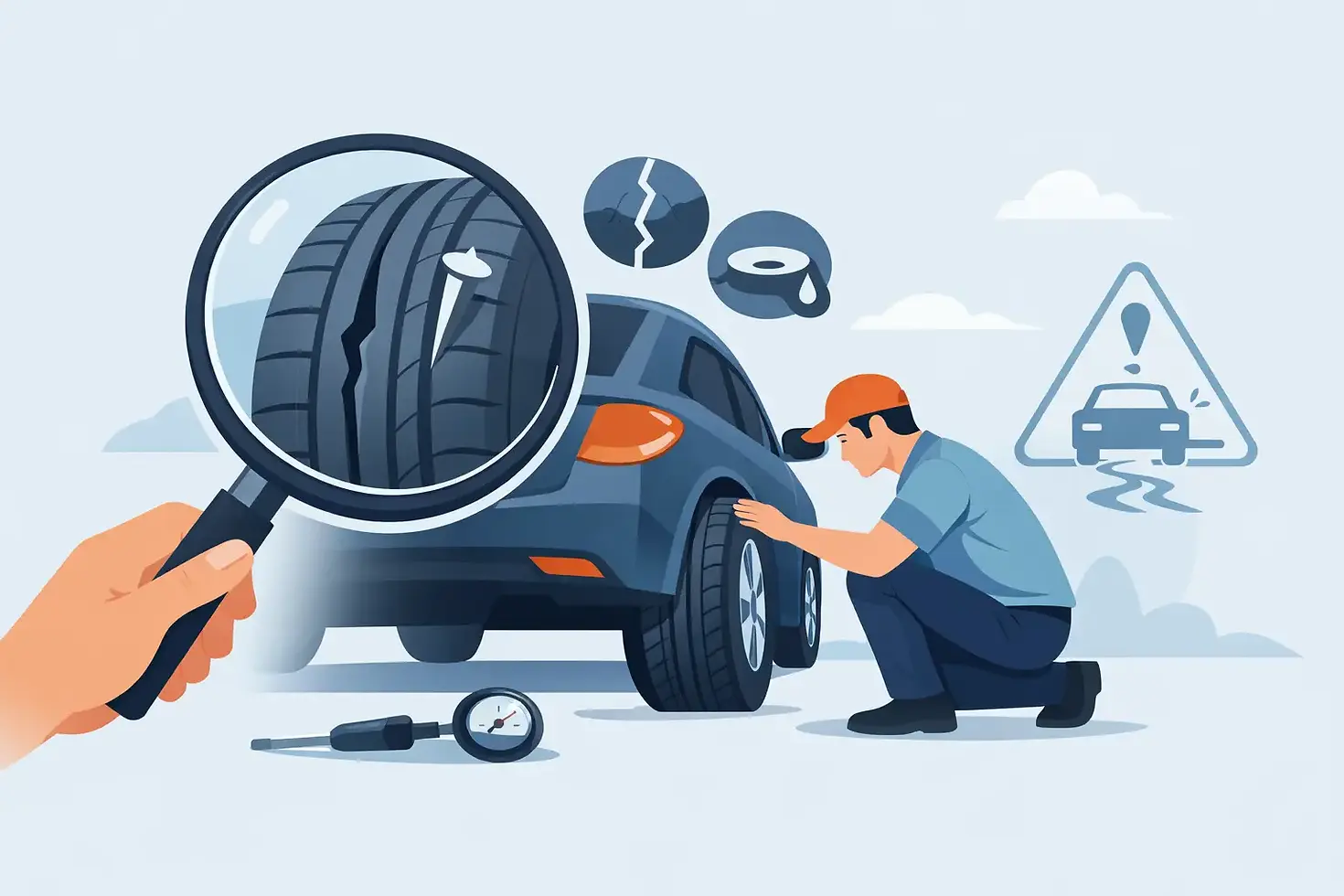
The tyre sidewall flexes constantly, so damage here is more serious than many drivers realise. Check the outer and inner sidewall where possible for cuts, splits, deep scrapes, cracking and raised areas.
Fine surface cracking can develop as tyres age, particularly on vehicles that spend plenty of time in the sun or sit unused for long periods. Small cosmetic cracks may not mean immediate failure, but deeper cracks or widespread dry, brittle-looking rubber need professional advice. Tyres can age out before the tread wears away, especially on caravans, trailers, low-kilometre cars and spare wheels.
A cut that exposes fabric cords, or a deep gouge from clipping a kerb, is not a wait-and-see problem. The internal structure may be compromised even if the tyre is still holding air. The same applies to a bulge or bubble in the sidewall or tread. A bulge usually means the internal cords have been damaged by a pothole, kerb strike or impact. That tyre can fail suddenly and should be replaced, not repaired.
Do not overlook the rim itself. A bent, cracked or badly corroded wheel can cause an air leak and may contribute to vibration. If you have hit a deep pothole or kerb and notice a new vibration afterwards, inspect the tyre and wheel promptly.
Know which punctures can be repaired
Not every puncture means buying a new tyre. A small, straightforward puncture in the central tread area can sometimes be repaired safely, provided the tyre has not been driven while flat or severely underinflated. The repair needs to be assessed from inside the tyre, not simply plugged from the outside.
Punctures in the shoulder or sidewall are generally not repairable because those areas flex too much. Nor is a tyre safe to repair if its inner lining has been damaged by running flat. This is why it pays not to keep driving on a tyre that has lost pressure, even if the trip is only a few kilometres.
If the tyre pressure warning light comes on, pull over safely when practical and inspect the tyres. Check the pressure, fit the spare if necessary, or arrange assistance. Continuing at highway speed on a deflated tyre can quickly turn a repairable puncture into a replacement tyre and potentially damage the wheel as well.
Pay attention to what the vehicle is telling you
Tyre damage does not always announce itself with a visible flat. Changes behind the wheel can be an early warning. A steering wheel vibration at certain speeds may be caused by a wheel balance issue, tyre damage or a bent wheel. A vehicle that drifts or pulls to one side can point to tyre pressure differences, alignment trouble, brake concerns or road camber, so it needs sensible diagnosis rather than guesswork.
A rhythmic thumping sound can indicate a separated belt, an out-of-round tyre or uneven tread wear. A sudden increase in road noise may also be linked to cupping or worn tread. These symptoms do not prove the tyres are at fault, but they are good reasons to book an inspection.
For 4WDs, utes and vehicles that regularly tow, tyre checks deserve extra attention. Extra load, rough tracks and gravel roads increase the chance of cuts, impacts and pressure-related wear. Use load-appropriate tyres and pressures, and inspect them after off-road use rather than waiting for the next scheduled service.
When a tyre should not be driven on
Some tyre issues call for immediate action. Do not drive on a tyre with a visible bulge, exposed cords, a split sidewall, a major cut, a completely flat condition or tread worn to the indicators. Fit the spare if it is safe to do so and if the spare is serviceable, or arrange roadside help.
A tyre with a suspected slow leak may be usable only long enough to get it inspected, provided it is inflated to the correct pressure and has no visible structural damage. Keep the trip short and avoid high speeds. It depends on the cause of the leak, which is why a proper inspection is the sensible call.
Make tyre checks part of normal maintenance
Check pressures monthly and before road trips, inspect the tread and sidewalls at the same time, and rotate tyres at the interval recommended for your vehicle. Rotation can help tyres wear more evenly, although the correct pattern depends on whether the vehicle is front-wheel drive, rear-wheel drive, all-wheel drive or fitted with directional tyres.
Also check your spare. It is easy to forget until the day you need it, only to find it is low on air, cracked or unsuitable for the vehicle. If you have a space-saver spare, follow its speed and distance restrictions.
If you are unsure what you are seeing, a qualified mechanic can assess tyre condition alongside wheel alignment, suspension and steering components. At Scott Forbes Automotive, we can inspect the issue, explain what has caused it and give you straightforward advice on the safest next step. A few minutes spent checking your tyres now is far better than finding out about damage when the road is wet and traffic is moving fast.


Comments