
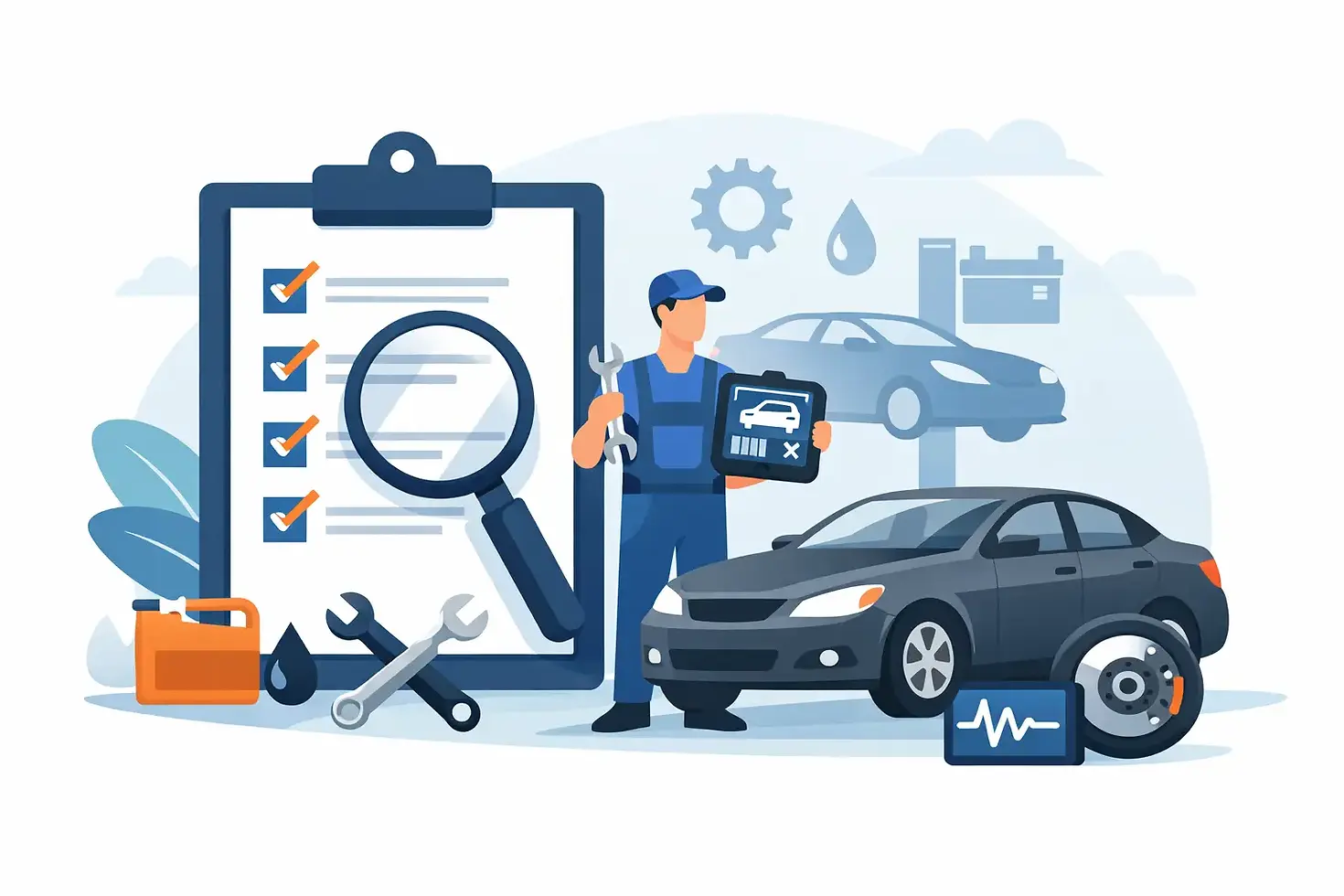
Service Checklist for Used Cars That Matters
A used car can look tidy on the lot, drive well on a short test drive and still be overdue for work that will cost you later. That is why a proper service checklist for used cars matters. It gives you a clear way to check what has been done, what has been missed and what needs attention now, before small problems turn into expensive repairs.
If you have just bought a second-hand car, or you are about to, the goal is simple. You want safe, reliable motoring without guessing. Some vehicles come with a full history and careful previous owners. Others have patchy records, missed services or wear that is not obvious until the car is on the road every day. A good checklist helps take the guesswork out.
What a service checklist for used cars should cover
The first thing to check is the service history. A stamped log book is useful, but it is not the whole story. You want to see invoices, dates, kilometre readings and details of what was actually replaced. A car that has had regular oil changes, brake work and scheduled maintenance is usually a safer bet than one with a vague claim of being "always serviced".
After that, look at the items that affect safety, reliability and running costs. Engine oil and filter, air filter, cabin filter, coolant, brake fluid and transmission fluid all need attention at the right intervals. If there is no clear evidence these have been checked or replaced, it is smart to treat the car as due.
Tyres also tell a story. Uneven wear can point to alignment issues, suspension wear or poor maintenance. Brake pad thickness, disc condition and the way the pedal feels on the road matter just as much. A used car does not need to be perfect, but it does need to be honest.
Start with service records, not promises
A seller can tell you the car has been looked after, but records are what count. Check whether the kilometre intervals make sense and whether major items have been done on time. Timing belts are a big one. If a vehicle is due by age or kilometres and there is no proof it has been replaced, that job should move high up your list.
The same goes for spark plugs, coolant flushes and automatic transmission servicing. These are often skipped because the car still seems to drive fine. The problem is that neglect shows up later, and later is usually when the repair bill gets bigger.
If the car is still within a manufacturer warranty period, correct log book servicing matters even more. Done properly, it helps protect that cover. Done poorly or ignored, it can create headaches when something goes wrong.
The key mechanical checks after buying used
Once the car is yours, or before you commit to buying it, the smart move is a full inspection and baseline service. That gives you a starting point instead of relying on assumptions.
Engine and fluids
Fresh engine oil and a new filter are usually the first jobs worth doing unless there is clear, recent proof they have just been done. Oil is cheap compared with engine repairs. Coolant should be checked for level, condition and correct type. Brake fluid should be tested or replaced if it is old. Power steering fluid, where fitted, also needs checking.
Transmission fluid is one area many owners overlook. Some modern gearboxes are marketed as sealed or low maintenance, but that does not mean ignore them forever. Service needs vary by make and model, so this is one of those areas where the right advice matters.
Brakes, steering and suspension
A used car can feel fine around town and still have worn components underneath. Brake pads, rotors, hoses and fluid condition all need to be checked properly. Steering and suspension parts such as shocks, struts, bushes, ball joints and tie rod ends affect both safety and tyre wear.
If the car pulls to one side, clunks over bumps or feels unsettled in corners, do not put it down to age alone. Those symptoms usually point to parts that need attention.
Tyres and wheel alignment
Tyres are not just about tread depth. Check age, sidewall condition and whether all four match in size and type. Cheap mismatched tyres can affect handling and braking more than many drivers realise. If new tyres are fitted, a wheel alignment is often worth doing at the same time.
Battery and charging system
A weak battery is one of the most common problems after buying a used car. If the battery is older, slow to crank or showing signs of leakage or corrosion, it may not have much life left. The alternator and charging system should also be tested rather than guessed.
Don’t ignore the cooling system
Cooling system issues are a common way a cheap used car becomes an expensive one. Hoses, radiator condition, thermostat operation and water pump condition all matter. If there are stains, coolant smells or signs of overheating in the vehicle’s history, take them seriously.
Some vehicles are known for particular cooling system faults, and this is where a workshop with broad experience across different makes can save you time. Not every used car has the same weak points.
A used car checklist should include wear items by age
Kilometres matter, but age matters too. A car with low kilometres can still have rubber components that have hardened, cracked or perished over time. Belts, hoses, tyres, wiper blades and suspension bushes can all deteriorate even if the car has not been driven much.
This catches a lot of buyers out. A twelve-year-old car with tidy paint and low mileage can still need a fair bit of catch-up maintenance. It may still be the right buy, but you want to know that before you commit.
Registration, roadworthiness and NSW reality
In NSW, a car can be registered and still have maintenance issues that need sorting. Rego status is not the same thing as being fully up to date on servicing. That is why inspection and servicing should be treated as separate jobs.
If you are buying privately, this is even more important. A proper pre-purchase inspection can pick up leaks, brake wear, tyre issues, suspension faults and signs of previous poor repair work. That gives you a better basis for negotiation, or a good reason to walk away.
For local drivers around Wallsend, Maryland and the broader Newcastle area, this often comes down to practicality. You do not need a flashy report full of jargon. You need straight answers about what is safe, what is urgent and what can wait a bit.
When the checklist changes for 4WDs and EVs
Not every used vehicle should be checked the same way. A 4WD that has done towing, beach work or off-road driving may need closer attention on suspension, driveline components, wheel bearings and underbody condition. A city hatchback will have a different wear pattern.
EVs also need a different approach. They do not need engine oil changes, but they still need tyre checks, brake inspection, suspension checks, cabin filters and assessment of the high-voltage system by the right people. Service history still matters. It is just a different checklist.
The smartest move is to set a baseline service
For most used cars, the best approach is not to chase every possible item at once. It is to establish a baseline. Start with the fluids, filters, brakes, tyres and any obvious safety or reliability concerns. Then plan ahead for the next round of maintenance based on the car’s age, kilometres and condition.
That approach helps you control costs without neglecting what matters. It also means you are not replacing parts for the sake of it. Some jobs are urgent. Others can be monitored and scheduled.
At Scott Forbes Automotive, that is usually the difference between helpful advice and sales talk. A good workshop should tell you what needs doing now, what should be booked next and what is still serviceable.
A practical used car service plan
If the service history is incomplete, assume less and check more. Book an inspection, have the vehicle looked over properly and ask for clear priorities. If the records are solid, use them to plan the next due items rather than starting from scratch.
Either way, keep your own records from day one. That makes future servicing easier, protects resale value and gives you a much better idea of the true cost of ownership.
A used car does not need to be a gamble. With the right checks, the right servicing and honest advice, it can be a sensible buy that serves you well for years. The best time to get on top of it is before a warning light, a strange noise or a roadside breakdown makes the decision for you.


Comments