

Engine Warning Light Meaning Explained
You are driving to work, school drop-off or out of Newcastle for the weekend, and suddenly a light appears on the dash. No strange noise, no smoke, no obvious problem - just that engine symbol staring back at you. If you are wondering about engine warning light meaning, the short answer is this: your car has detected a fault, but the seriousness can range from minor to urgent.
That is why guessing is risky. Some faults will let you keep driving for a short time without much drama. Others can lead to poor performance, higher fuel use, emissions problems or engine damage if left too long. The warning light is not there to scare you. It is there to tell you the car needs proper attention.
What the engine warning light meaning usually tells you
The engine warning light, also called the check engine light on some vehicles, is linked to the vehicle's on-board diagnostics system. Modern cars monitor a wide range of sensors and operating conditions. When the system sees a reading outside its expected range, it stores a fault code and switches the light on.
That does not always mean the engine itself is about to fail. In many cases, the issue may involve fuel delivery, ignition, emissions equipment, airflow measurement, sensor faults or even something as simple as a loose fuel cap on certain models. On newer vehicles, the fault may also affect how the transmission and engine work together.
The key point is that the engine warning light meaning is not one single problem. It is a warning category. The actual cause has to be diagnosed properly with scan tools and mechanical checks.
Flashing light or steady light - it matters
A steady engine warning light usually means a fault has been detected, but the car may still be driveable for the moment. You should still get it checked as soon as practical. Putting it off often turns a smaller repair into a bigger one, especially if the vehicle starts running rich, misfiring or compensating for a failed sensor.
A flashing engine warning light is more serious. That often points to an active misfire or another fault serious enough to risk damage, particularly to the catalytic converter. If the light is flashing and the engine is running rough, down on power, shaking or making unusual noises, it is best to stop driving and arrange inspection straight away.
This is where a bit of judgement matters. If the light comes on but the car feels normal, you may be able to drive carefully to a workshop. If the light is flashing or the car is clearly not running properly, keep driving only if absolutely necessary and only for the shortest possible distance.
Common reasons the light comes on
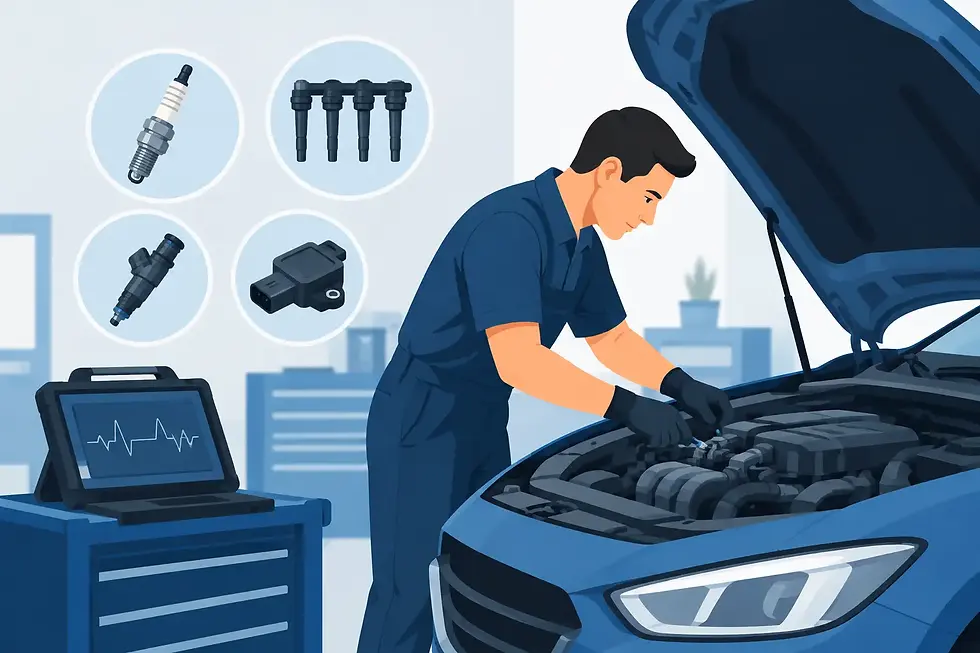
In everyday workshop work, a few causes come up again and again. Faulty oxygen sensors are common, especially on higher kilometre vehicles. Ignition coil or spark plug problems can cause misfires. Airflow sensor faults can upset the fuel mixture. Issues with the catalytic converter, EGR system or other emissions components also trigger the light regularly.
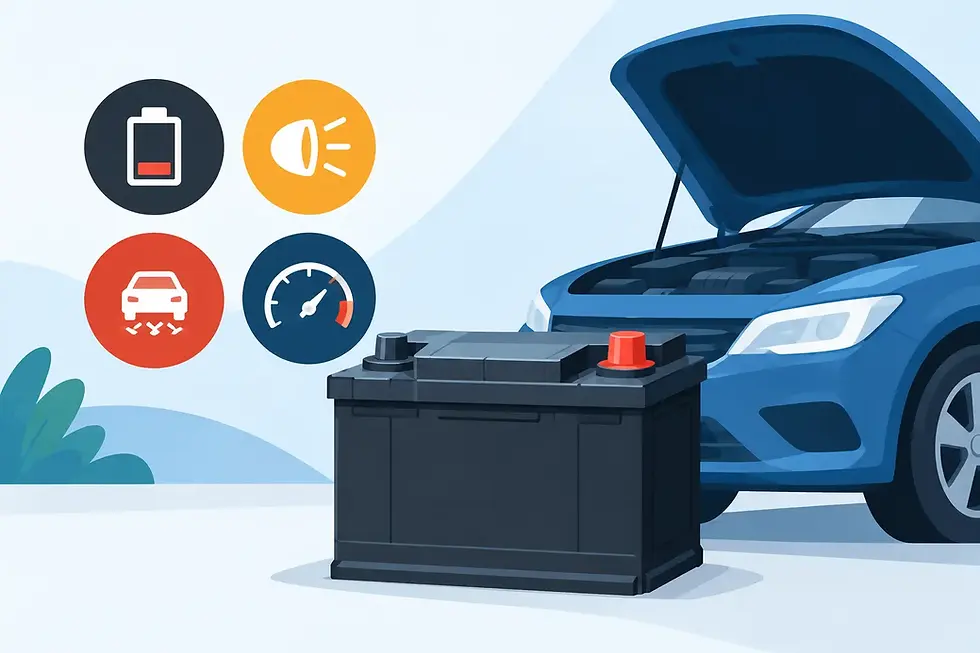
Sometimes the fault is more straightforward than people expect. A weak battery can cause low-voltage issues and odd warning behaviour on some vehicles. Wiring faults, damaged connectors or moisture in electrical components can also be the real problem. On diesel vehicles, DPF and related emissions faults are another common reason.
Then there is the other side of it - what starts as an engine warning light may actually be tied to maintenance that has been missed. Old plugs, overdue filters, neglected cooling system faults or fuel system issues can all lead to warning lights if left long enough.
What you might notice along with the warning light
Sometimes the dash light comes on before you feel anything. Other times the car gives you a few clues. It might idle roughly at the lights, hesitate under acceleration, use more fuel than normal or feel sluggish on hills. You may notice a petrol smell, harder starting, stalling or the engine dropping into a reduced-power mode.
None of those symptoms confirms the fault on its own, but they do help narrow down how urgent the problem may be. If the car is overheating, losing power suddenly, blowing smoke or making mechanical noise, that moves beyond a standard warning light issue and needs immediate attention.
Can you keep driving?
This is the question most drivers really want answered, and the honest answer is: it depends.
If the light is steady, the vehicle is driving normally, engine temperature is stable and there are no unusual noises, you can often drive it carefully for a short period while arranging a booking. That said, it should not be ignored for weeks. The longer a fault is left, the greater the chance of poor fuel economy, extra wear or damage to related parts.
If the light is flashing, the car is misfiring, there is a burning smell, heavy vibration, smoke, overheating or major power loss, stop driving as soon as it is safe. Continuing on in that condition can turn a diagnostic job into a major repair bill.
For families, commuters and tradies who rely on their vehicle every day, this is usually the sensible approach: do not panic, but do not assume it will sort itself out either.
Why a scan tool alone is not the full answer
A fault code is a starting point, not a complete diagnosis. This catches plenty of people out. The code might point to a sensor, but the real cause could be wiring, vacuum leaks, fuel pressure, carbon build-up or another related component affecting the reading.
For example, a code for a lean condition does not automatically mean a failed oxygen sensor. It could be unmetered air entering the engine, low fuel pressure or an intake issue. Replacing parts based only on the code can waste money quickly.
A proper diagnostic process looks at the code, the live data, the vehicle's symptoms and the mechanical condition of the engine. That is how you get an accurate answer instead of a parts-swapping exercise.
The engine warning light meaning on petrol, diesel and hybrid vehicles
The basics are similar across vehicle types, but the likely causes can differ.
On petrol vehicles, ignition faults, sensor issues and fuel mixture problems are common. On diesels, the warning may be related to injectors, glow systems, turbo control, EGR faults or DPF issues. Hybrids can still trigger engine-related faults on the petrol side, while also requiring care around the interaction between electrical and engine systems.
This is one reason broad workshop experience matters. Different makes and models have their own patterns, and the same warning light on two vehicles can mean very different repair paths.
What to do when the light comes on
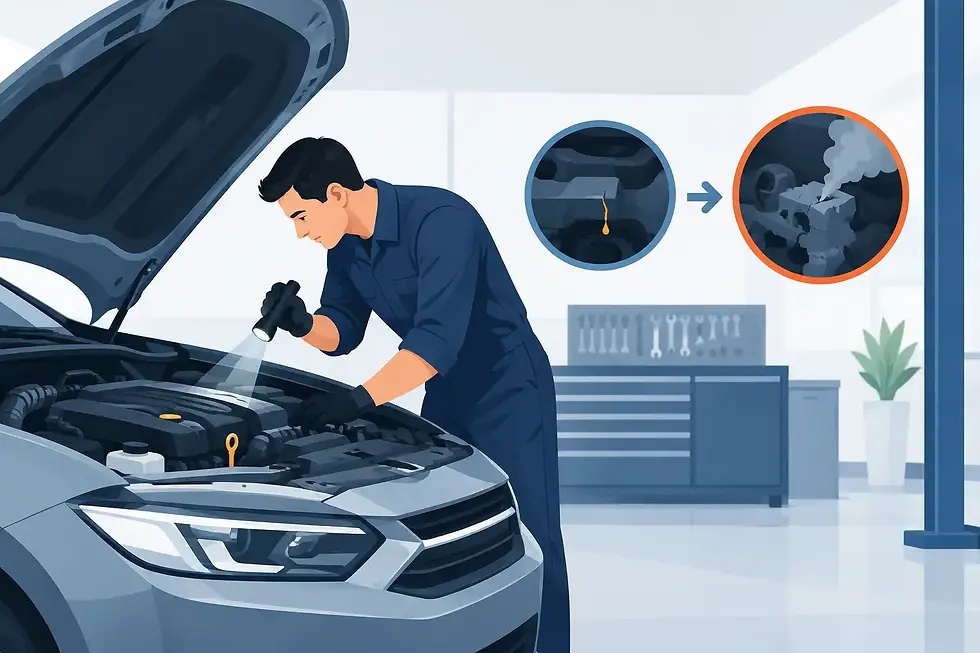
Start with the basics. Pay attention to whether the light is steady or flashing. Notice any change in power, noise, temperature or drivability. If it is safe, check for obvious signs such as loose caps, fluid leaks or overheating. Do not open the radiator cap when hot.
If the car feels normal, book it in promptly for diagnosis. If it feels rough, unsafe or is flashing the warning light, stop driving and get advice straight away. Waiting for the next service is rarely the right move.
At Scott Forbes Automotive, this is the sort of issue we see every week. The aim is simple - identify the actual cause, explain it clearly and repair what is needed without wasting your time or money.
Why quick action usually saves money
A warning light by itself does not always mean a major repair, but delay is what often turns it into one. A small misfire can damage a catalytic converter. A sensor fault can increase fuel use for weeks. An unresolved running issue can foul plugs, affect idle quality and put extra stress on other components.
Cars are far better at detecting faults than they used to be. That is a good thing if the warning is acted on early. It gives you a chance to fix the problem before it becomes more expensive or leaves you stranded.
For local drivers around Wallsend, Maryland and the wider Newcastle area, the practical approach is straightforward. Treat the warning light as useful information, not background noise. If the car is still running normally, get it checked soon. If it is running badly or the light is flashing, stop and get it looked at properly.
A dash light does not tell you everything, but it does tell you this much: your car is asking for attention now, not when it becomes inconvenient.
Comments