

How to Tell if Suspension Is Worn
That unsettled feeling over a speed hump usually shows up before a suspension fault becomes obvious. If you are wondering how to tell suspension worn, the first clue is often that the car no longer feels planted, comfortable or predictable the way it used to.
Suspension problems rarely appear all at once. More often, the change is gradual. A car that used to feel steady through corners starts leaning more. A ute or SUV that once handled bumps without fuss begins crashing over rough roads. You might hear a knock from the front end, notice uneven tyre wear, or feel the steering getting vague. None of those signs should be ignored, because worn suspension affects safety, braking, tyre life and overall control.
How to tell suspension worn from everyday driving
Most drivers notice suspension wear from behind the wheel, not during a visual inspection. The car starts behaving differently in ways that are easy to put down to rough roads or older tyres, but the pattern matters.
If the vehicle feels bouncy after going over a bump, that is a common warning sign. A healthy suspension should absorb the bump and settle quickly. If it keeps bouncing, the shock absorbers or struts may be worn. On the other hand, if the ride feels harsh and jarring rather than floaty, that can point to other suspension faults such as seized components, damaged bushes or incorrect ride height.
Steering feel is another giveaway. If the car wanders on the road, feels loose in corners or needs constant small corrections to stay straight, worn suspension parts could be part of the problem. That said, steering issues can also come from tyres, wheel alignment or steering components, so proper inspection matters.
Braking can also feel different. If the front of the car dives heavily under brakes, the rear squats during acceleration, or the vehicle feels unstable during sudden stops, worn shocks or struts are worth checking.
The most common signs of worn suspension
A few symptoms come up again and again when suspension components are getting tired.
Uneven tyre wear is one of the biggest. If the tread is wearing faster on one edge, or the tyres are scalloped or cupped, the suspension may not be keeping the tyre in consistent contact with the road. Some tyre wear patterns can also come from poor alignment or incorrect tyre pressure, so it is not always a suspension issue on its own, but it is a strong clue.
Knocking, clunking or squeaking noises over bumps are also common. Worn sway bar links, control arm bushes, strut mounts and ball joints can all make noise. A rattle from the front end does not automatically mean the shocks are gone. Suspension systems have a lot of moving parts, and several different faults can sound similar.
One corner of the car sitting lower than the others is another sign something is not right. That can point to a weakened spring, suspension damage or a failed component. If the vehicle looks uneven when parked on level ground, it is worth having checked sooner rather than later.
How to tell suspension worn with a simple check at home
You can pick up some early signs yourself without getting under the car. Start with a walk-around on level ground. Look at ride height and see if one side or one corner appears lower. Check the tyres for uneven wear and look for obvious damage around the wheel area.
Then try a basic bounce test. Push down firmly on one corner of the vehicle and let go. The car should rise and settle quickly. If it continues bouncing, the shock absorber or strut at that corner may be worn. This test is not perfect on every vehicle, especially newer or heavier models, but it can still reveal obvious issues.
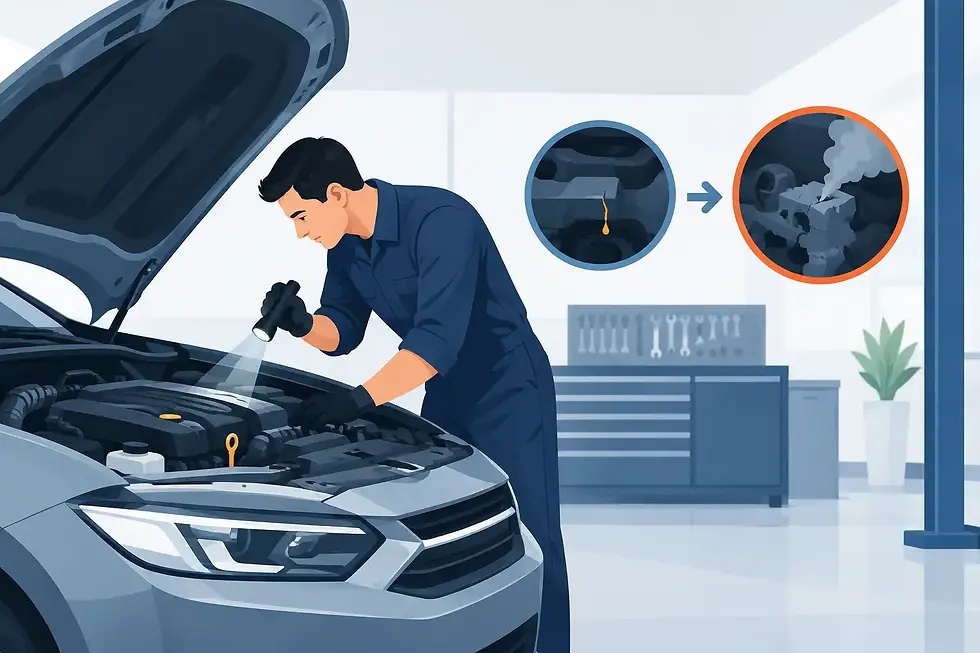
Take note of fluid leaks near the shocks or struts as well. If you can see oily residue on the shock body, that usually means the internal seal has failed. Once that happens, damping performance drops off.
Listen carefully during low-speed driving. Drive over a speed hump or rough patch and pay attention to any knocking, squeaking or metallic clunks. Also notice whether the steering wheel returns smoothly after a turn and whether the car tracks straight without feeling unsettled.
Which suspension parts usually wear out?
Suspension is not one single part. It is a system, and several components wear at different rates depending on the vehicle, road conditions and driving style.
Shock absorbers and struts are among the most common wear items. Their job is to control spring movement. When they weaken, the car becomes less stable and tyres lose contact with the road more easily.
Bushes also wear over time. These rubber or polyurethane mounts reduce vibration and allow controlled movement in suspension arms. When bushes crack or soften, handling can become vague and noisy.
Ball joints, sway bar links, control arms and strut mounts are other regular trouble spots. In 4WDs and vehicles that spend time on rough roads, suspension wear can show up sooner. Likewise, cars that carry heavy loads regularly may put more strain on springs and dampers.
There is no single replacement interval that suits every vehicle. Some suspension parts last well over 100,000 kilometres. Others wear much earlier, especially if the car sees rough Newcastle roads, potholes, kerbs or constant stop-start commuting.
Why worn suspension should not be left too long
A lot of drivers live with suspension wear for months because the car still seems drivable. The problem is that worn suspension usually gets more expensive the longer it is left.
Tyres often cop the damage first. If the suspension is not controlling wheel movement properly, tyre wear becomes uneven and tyre life drops. That can turn a repair that might have involved a pair of shocks or bushes into one that also needs a full set of tyres and a wheel alignment.
Safety is the bigger issue. A worn suspension system can increase stopping distances, reduce grip in the wet and make emergency manoeuvres less controlled. Even if the change feels mild around town, it can become a real problem at highway speed or when you have to brake or swerve suddenly.
There is also the comfort factor. Drivers often get used to the gradual decline and forget how the car used to feel. Once the worn parts are replaced properly, many are surprised by how much better the vehicle rides and handles.
When it is not suspension
Not every symptom points straight to worn suspension. That is where some confusion comes in.
A vibration through the steering wheel may be wheel balance, tyre damage or brake issues. Pulling to one side could be tyre pressure, alignment or a sticking brake caliper. Road noise might be wheel bearings. Even uneven tyre wear can have more than one cause.
That is why proper diagnosis matters. Replacing shocks because the car feels rough will not solve much if the real fault is in the tyres or steering. The right approach is to inspect the whole system, check for play, look for leaks or damage, and road test the vehicle to confirm what is actually worn.
Getting it checked before it gets worse
If your car feels unstable, noisy or harsher than normal, it is worth booking a suspension inspection rather than waiting for the problem to become obvious. A workshop can check shocks, struts, springs, bushes, mounts and steering-related components, then tell you what is worn now and what can wait.
That matters because not every recommendation needs to happen immediately. Sometimes there is a clear safety issue that should be repaired straight away. Other times, a component is showing wear but still serviceable for the short term. Straight advice helps you plan the work without guessing.
For local drivers around Wallsend, Maryland and the broader Newcastle area, this is the sort of job that benefits from experienced eyes rather than a quick glance. Scott Forbes Automotive can inspect the suspension properly, explain what is causing the symptoms and carry out the repairs needed to get the vehicle feeling safe and settled again.
If the car does not feel right, trust that instinct. Suspension wear usually starts with a small change in how the vehicle rides, steers or brakes, and acting early is often the simplest way to keep the repair smaller, safer and more affordable.

Comments