

A Guide to Battery Testing for Cars

Flat battery trouble usually shows up at the worst time - on a cold morning, in a busy car park, or when you are already late. This guide to battery testing for cars is here to help you spot problems early, understand what a proper test tells you, and know when a battery needs charging, repair work around the charging system, or outright replacement.
A lot of drivers assume a battery is either good or dead. In the workshop, it is rarely that simple. A battery can still crank the engine today and still be on the way out. It can also test low because the vehicle has a charging fault, a parasitic drain, corroded terminals, or simply because it has been doing short trips and not getting enough time to recover.
Why battery testing matters
Your battery does more than start the car. It supports the electrical system during start-up, helps stabilise voltage, and works with the alternator to supply power to everything from lights and wipers to safety systems and accessories. In many newer vehicles, battery condition also affects stop-start operation, onboard electronics and fault logging.
That is why proper battery testing matters more than guessing from symptoms alone. Replacing a battery without checking the rest of the system can waste money. On the other hand, ignoring a weak battery can leave you stranded and can put extra strain on the starter motor and charging system.
The common signs a battery needs testing
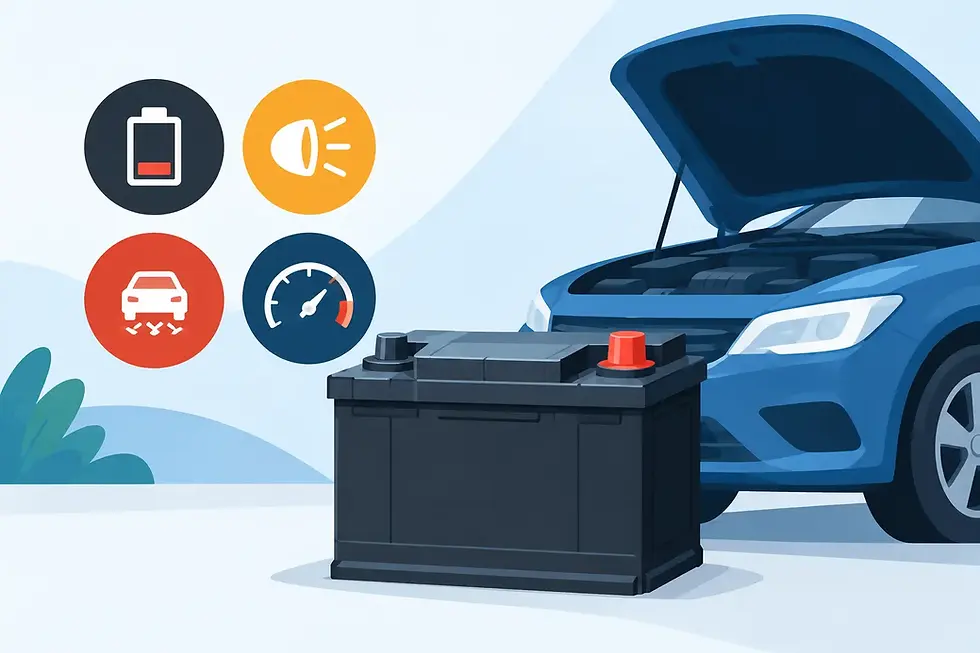
Most batteries give some warning before they fail completely, but not always. Slow cranking is one of the clearest signs. If the engine sounds sluggish when you turn the key or press start, the battery may be low on charge or losing capacity.
You might also notice dim headlights at idle, warning lights on the dash, stop-start no longer working, power windows moving slowly, or the need for frequent jump-starts. Sometimes there are no obvious symptoms at all, especially if the battery is only failing under load.
Age matters too. In NSW conditions, many car batteries last around three to five years, but heat, vibration, driving habits and electrical demand all affect that. A 4WD with accessories, or a commuter car doing only short suburban trips, may wear through a battery faster than expected.
What a proper guide to battery testing for cars should include
A proper battery test is not just reading voltage with a basic meter and calling it done. Voltage is useful, but it is only part of the picture. A healthy battery can show reasonable voltage at rest and still fail when a proper load or conductance test is carried out.
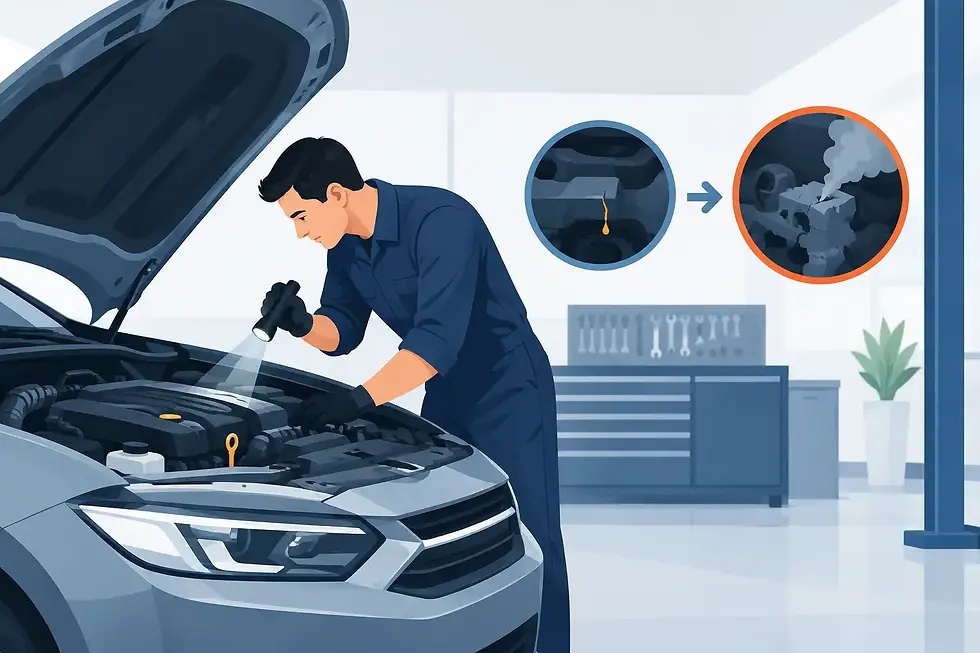
The first step is a visual inspection. Battery terminals should be clean and tight, with no heavy corrosion, damaged clamps or signs of acid leakage. The casing should not be swollen or cracked. If there is a strong sulphur smell, that can point to internal failure or overcharging.
After that, the state of charge needs to be checked. If the battery is very low, test results can be misleading. In some cases the battery should be recharged before final testing. A workshop-grade tester can then measure cold cranking performance and overall battery health against the battery's rated specifications.
Just as important is checking charging voltage with the engine running. If the alternator is undercharging or overcharging, fitting a new battery alone will not fix the root cause. If there is a drain while the vehicle is switched off, that also needs to be identified.
Voltage testing versus load testing
This is where many DIY checks fall short. A multimeter reading across the terminals can give a rough idea of charge level. Around 12.6 volts with the engine off generally suggests a full charge. Lower readings can indicate partial discharge. But voltage alone does not confirm the battery can deliver enough current under load.
Load testing or conductance testing is what tells you more about the battery's ability to perform when the starter motor demands a high burst of power. That is the difference between a battery that looks acceptable on paper and one that actually starts the car reliably.
There is a trade-off here. A simple voltage check is quick and cheap, and it can be helpful if you are doing a basic home check. But if you want a reliable answer, especially before winter, before a road trip, or when buying a used car, a full battery and charging system test is the better option.
When the problem is not the battery
A weak start does not automatically mean the battery is finished. We often see charging faults, poor earth connections, corroded terminals, worn starter motors and parasitic drains mistaken for battery failure.
Short-trip driving is a common one around suburban Newcastle. If the car is mainly used for school runs, local errands and short commutes, the battery may never fully recharge. Add a dash cam, mobile charging, heated screens or aftermarket accessories, and the battery can be under pressure even if it is not defective.
Then there is the alternator. If charging voltage is too low, the battery gradually goes flat. If it is too high, the battery can overheat and wear out early. That is why testing needs to look at the full system, not just the battery sitting in isolation under the bonnet.
Battery testing for modern vehicles, 4WDs and EV-related systems
Newer vehicles are more sensitive to battery condition than many drivers realise. Cars with stop-start systems often use EFB or AGM batteries, and they need the correct battery type and correct testing procedure. Fitting the wrong battery or skipping battery registration where required can cause ongoing issues.
For 4WDs, the picture can be more complicated again. Touring accessories such as driving lights, fridges, brake controllers, winches and dual battery setups all place different demands on the electrical system. A test should take those additions into account, especially if you are seeing repeated battery trouble.
Hybrid and EV owners should also know there is a difference between the high-voltage system and the smaller 12-volt battery used for control systems and accessories. Even when the main traction battery is fine, a failing 12-volt battery can still cause no-start issues, warning messages or odd electrical behaviour.
When to replace instead of recharge
Sometimes a battery only needs a proper recharge. That is often the case after the vehicle has been sitting for a while, or when lights have been left on. But if the battery repeatedly goes flat, tests poorly after charging, or is already well into its service life, replacement is usually the smarter and more cost-effective call.
Physical condition matters here as well. If the case is swollen, leaking or damaged, replacement should not be delayed. The same applies if there is heavy terminal corrosion that has spread into the cables, or if the battery cannot hold charge after testing.
Price should not be the only factor. The right battery needs to suit the vehicle, the way it is driven, and any accessories fitted. A cheap battery that is underspecified for the job often costs more in the long run.
How often should you have a car battery tested?
There is no single rule that suits every vehicle, but annual testing is a sensible baseline once the battery is a couple of years old. It is also worth checking before winter, before a long trip, and any time you notice slower cranking or electrical glitches.
If your vehicle is used hard, sits parked for long periods, or runs extra accessories, more frequent testing makes sense. For used car buyers, battery and charging system checks can also save trouble after purchase. A battery that barely passes on the day of sale may not last much longer.
What to expect from a workshop test
A proper workshop battery test should be quick, clear and practical. You want to know whether the battery is healthy, low on charge, nearing the end of its life, or being affected by another fault. You also want the result explained in plain language, not buried in jargon.
At Scott Forbes Automotive, that means checking battery condition, terminal and cable condition, and charging performance so the advice matches the actual problem. If the battery needs replacing, the correct type and rating matter. If the issue is elsewhere, that needs to be sorted before it sends you back to square one.
Battery problems are easy to put off when the car still starts most days. The trouble is they rarely fail on a convenient schedule. If your vehicle has been cranking slowly, your battery is a few years old, or you just want peace of mind before the next early start, getting it tested now is usually cheaper than dealing with a no-start later.
Comments