

What Is Log Book Servicing?
You buy a car, get handed the owner’s manual and service book, then a few months later the first reminder pops up. That’s usually when people start asking, what is log book servicing, and do I really need to follow it exactly? Fair question. For most drivers, log book servicing is simply the manufacturer’s scheduled service plan for your vehicle, carried out at set time or kilometre intervals to keep the car safe, reliable and covered under warranty.
It is not just an oil change with a fancier name. A log book service follows the specifications set by the vehicle manufacturer for your exact make, model and engine. That means the mechanic checks, replaces and records the items due at that particular interval, whether that is 10,000km, 15,000km, 12 months or whatever the handbook states.
What is log book servicing and how does it work?
Think of your log book as the service schedule written by the people who built the car. It tells the workshop what needs to be inspected, adjusted or replaced over the life of the vehicle. That schedule is based on normal wear, operating conditions and the design of the engine, transmission, brakes, cooling system and other components.
When a workshop carries out a log book service, they work to that schedule rather than guessing what the car might need. They record the service in the log book or digital service history, use parts and fluids that meet the required standards, and note any issues found along the way.
That matters because not every service is the same. One interval might mainly cover oil, filter changes and safety checks. The next may include spark plugs, cabin filters, brake fluid, transmission servicing or inspections of belts and hoses. A proper log book service is tailored to the age and mileage of the vehicle, not done as a one-size-fits-all job.
Why log book servicing matters
The biggest reason many people stick to the log book is warranty protection. If your car is still under its statutory warranty, following the manufacturer’s servicing requirements helps protect that cover. A lot of drivers still assume they must return to the dealership for every service, but that is not the case. You can have your vehicle serviced by a qualified independent workshop, as long as the service is carried out to manufacturer requirements.
That can make a real difference on price and convenience. You get the servicing your vehicle needs without dealership overheads, and you still maintain the records that show the car has been looked after properly.
There is also the longer-term benefit. Vehicles that are serviced on time generally have fewer major repair surprises than those that are neglected. Clean oil protects the engine. Fresh coolant helps prevent overheating. Brake inspections catch wear before it becomes a safety problem. A stamped and documented service history can also help when it is time to sell or trade in the car.
What is included in a log book service?
The exact inclusions depend on the vehicle and the service interval, but the purpose is always the same - keep the car maintained to manufacturer standards.
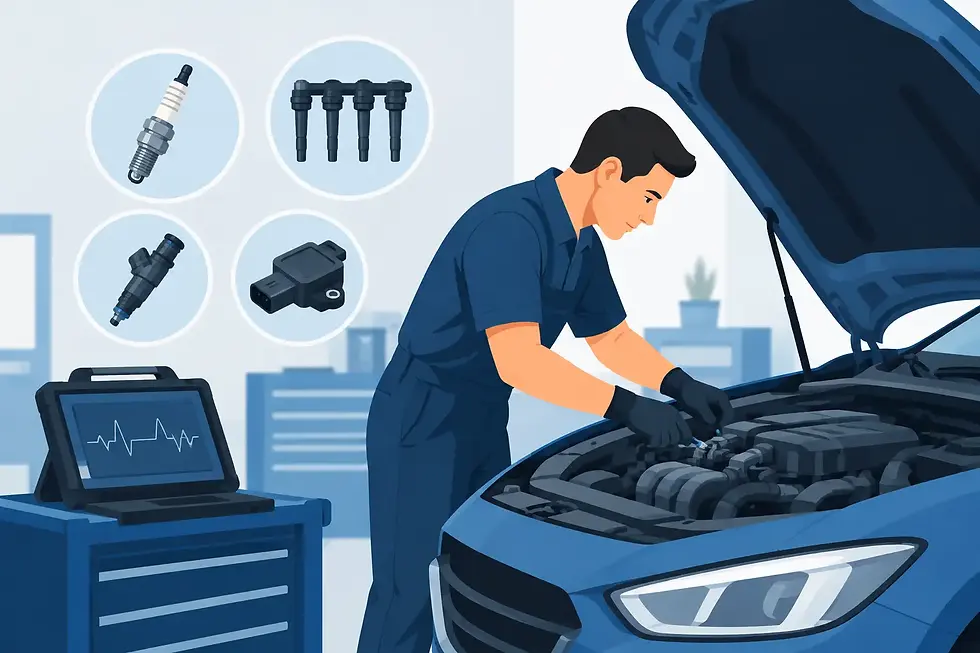
A typical log book service may include engine oil and oil filter replacement, checks of brakes, steering, suspension, tyres, battery, lights and fluid levels, plus inspections of belts, hoses and cooling components. Depending on the scheduled interval, it may also include air filters, cabin filters, spark plugs, fuel filters, brake fluid, transmission fluid or differential oils.
Modern vehicles may also require scan tool checks, software-related inspections and condition checks on electronic systems. For EVs and hybrids, the service approach is different again. There may be fewer traditional engine-related items, but there are still important checks around brakes, tyres, suspension, cooling systems, filters and high-voltage-related components as required by the manufacturer.
This is one reason experience matters. A workshop needs to know the difference between a basic service and the actual requirements of the manufacturer’s schedule. Missing a key item to keep the price low can cost more later.
Log book servicing vs a general car service
A general car service and a log book service can look similar on the surface, but they are not always the same thing.
A general service is often a routine maintenance service based on the vehicle’s current condition. It can be a good option for older vehicles that are out of warranty and no longer being maintained against the manufacturer schedule. It usually covers the core items needed to keep the car running safely and reliably.
A log book service is more specific. It follows the set service interval for that particular vehicle and includes the checks and replacements due at that stage. If your car is newer, still under warranty or you want a complete service history that matches the manufacturer plan, log book servicing is usually the right option.
For some vehicles, the choice is straightforward. For others, it depends on age, mileage, service history and how you use the vehicle. A 4WD towing regularly around Newcastle conditions may need more attention than a small commuter car doing light suburban driving, even if both are due for a scheduled service.
Do you have to service your car at the dealership?
No. This is one of the biggest misunderstandings around log book servicing.
You do not have to return to the dealership to maintain your statutory warranty. An independent workshop can carry out log book servicing, provided the work is done correctly, using appropriate parts and fluids that meet manufacturer specifications, and the service record is completed properly.
For many local drivers, that is a better fit. You still get qualified mechanical work, but with a more straightforward conversation, fairer pricing and often a workshop that gets to know your vehicle over time. That matters when a service uncovers something else, like uneven tyre wear, cooling system trouble or early brake wear.
A good workshop will explain what is due now, what can wait, and what needs urgent attention. That no-nonsense advice is often more useful than a generic service reminder.
When should a log book service be done?
Your log book will usually set the interval by time, kilometres or whichever comes first. That last part matters. If the book says every 12 months or 15,000km, you do not wait until both happen. If you hit 15,000km in eight months, it is due then. If you only drive 7,000km in a year, it is still due at 12 months.
Skipping scheduled servicing because the car seems to be running fine is risky. Fluids break down over time, not just distance. Rubber components age. Batteries weaken. Brake fluid absorbs moisture. Problems often build quietly before they become obvious.
If you have bought a used car and are not sure where it sits in the schedule, it is worth having the service history checked. That helps establish whether the car is up to date or overdue for major items such as timing belt replacement, transmission servicing or coolant changes.
What happens if you miss a log book service?
A late service does not automatically mean disaster, but it can create problems.
If the vehicle is under warranty, missed or delayed servicing can complicate any future warranty claim. If a major component fails and the service history is incomplete, the manufacturer may question whether the vehicle was maintained correctly.
Outside warranty, the issue is more practical. Missed servicing increases wear and makes it easier for small faults to go unnoticed. Dirty oil, worn filters, neglected fluids and missed inspections all add up. Sometimes the car will keep going without complaint until a more expensive repair lands on your lap.
If you are behind on servicing, the best move is to get it looked at properly rather than putting it off further. A workshop can assess what is overdue and help bring the maintenance back on track.
Choosing the right workshop for log book servicing
Not all servicing is equal, even when the invoice says log book service.
You want a workshop that understands manufacturer schedules, uses quality parts and fluids, and takes the time to inspect the vehicle properly. Clear record keeping matters too. So does honest advice. If extra work is needed, you should know why it is needed and whether it is urgent or simply something to monitor.
For local drivers in Wallsend, Maryland and the wider Newcastle area, the main thing is finding a workshop you can trust to do the job properly without overcomplicating it. That means qualified mechanics, straightforward communication and servicing that fits the way you actually use your vehicle.
At Scott Forbes Automotive, that is exactly how we approach log book servicing - by following the manufacturer requirements, protecting your warranty where applicable, and giving you practical advice you can use.
If you are wondering whether your car is due, the safest answer is simple: check the book, check the kilometres and do not wait for a problem to make the decision for you.


Comments