
Why Is My Car Losing Coolant?
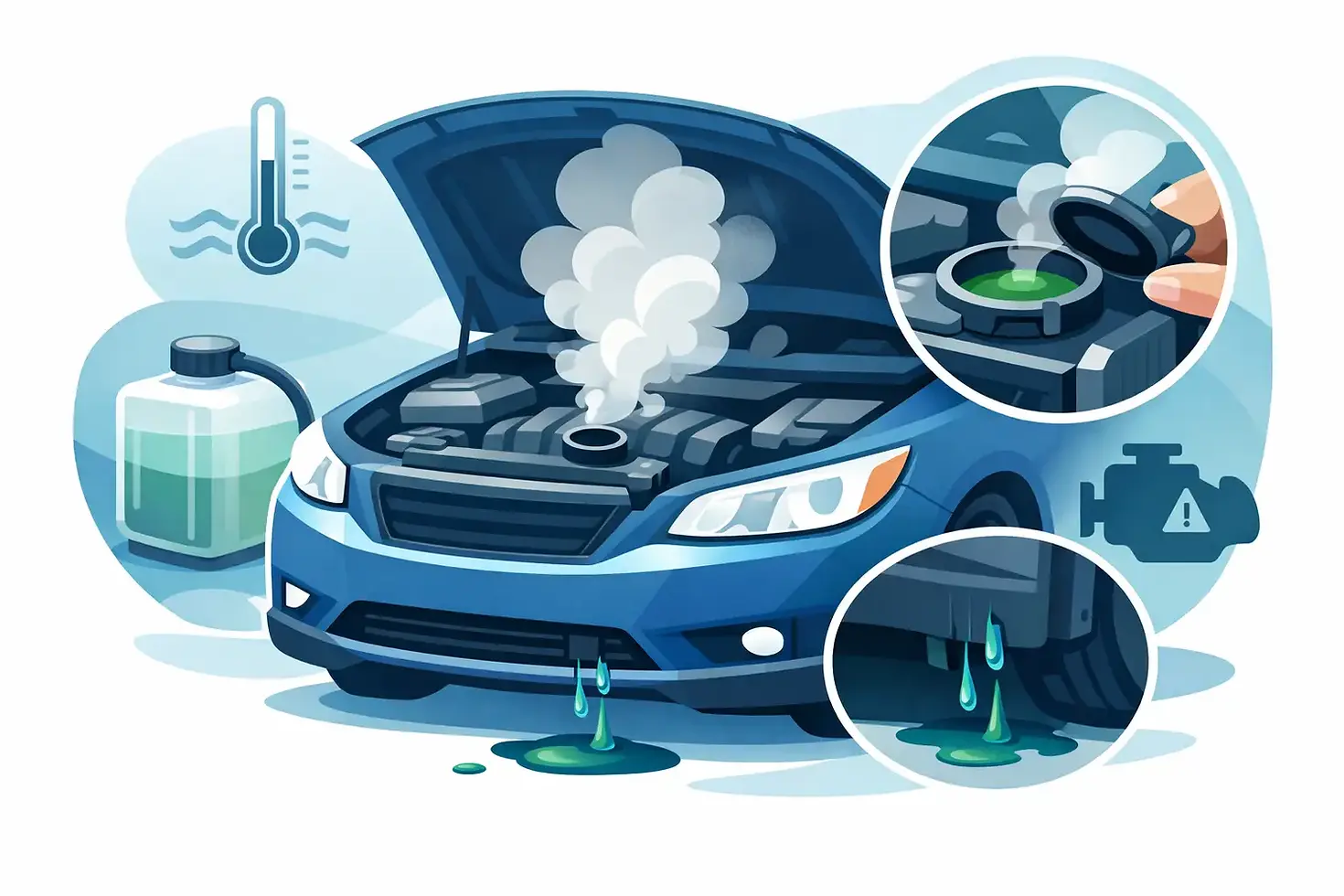
You top up the coolant, drive for a week or two, then check again and the level has dropped. If you’re asking why is my car losing coolant, the short answer is this - coolant does not normally just disappear. A small change in level can happen as the system settles, but repeated loss usually points to a leak, a pressure problem or an internal engine fault that needs proper attention.
The reason this matters is simple. Your cooling system keeps the engine at the right operating temperature. If coolant drops too low, the engine can overheat, and what starts as a minor repair can turn into a head gasket job, warped components or major engine damage. That’s why coolant loss is something to act on early, not later.
Why is my car losing coolant with no visible leak?
This is one of the most common questions in the workshop. Many drivers expect to see a puddle under the car, but plenty of coolant leaks do not leave obvious signs on the ground.
Some leaks only happen when the engine is hot and the cooling system is under pressure. In that case, coolant can seep out, hit a hot engine part and evaporate before it ever reaches the ground. You may notice a sweet smell, a bit of white residue around a hose connection or dried coolant marks near the radiator or expansion tank, but no obvious drip on the driveway.
Coolant can also be lost internally. If a head gasket is failing, or there is a crack in the cylinder head or engine block, coolant may enter the combustion chamber or mix with engine oil. That is a more serious issue, and it often develops gradually before becoming obvious.
Another possibility is a faulty radiator cap or expansion tank cap. These caps are designed to hold pressure in the system. If they stop sealing properly, coolant can escape as steam or overflow, especially after longer drives or towing.
The most common causes of coolant loss
In everyday workshop work, the problem is often one of the basics rather than something dramatic. Hoses age, clamps loosen, plastic tanks crack, and water pumps wear out. Even a tiny leak can steadily lower the coolant level over time.
Radiators can leak from the core, the side tanks or where the tanks are crimped to the body. Plastic radiator tanks are especially prone to cracking as they get older and go through thousands of heat cycles. Sometimes the leak is obvious. Other times it only shows up when the system is hot.
If the radiator is leaking, you might notice coolant staining on the front of the engine bay, a sweet smell after driving or dried residue around the radiator seams.
Perished hoses or loose clamps
Coolant hoses live in a hot environment and do wear out. Over time they can harden, swell, split or start leaking around the joins. A clamp that has lost tension can also allow a small seep that gets worse under pressure.
This is one of the more straightforward faults to fix, but if it is ignored, the hose can fail completely and leave you stranded.
Faulty water pump
The water pump circulates coolant through the engine and radiator. When the pump seal starts to fail, coolant can leak from a small drain hole in the pump housing. On some vehicles, that leak is easy to spot. On others, it can track around the engine and be harder to identify.
A failing water pump may also come with bearing noise, overheating or poor coolant circulation. In some cases, the pump is driven by the timing belt, which means the repair needs to be handled properly and on schedule.
Cracked expansion tank
Many modern vehicles use a plastic expansion or overflow tank. These tanks can become brittle with age and crack around the seams, hose outlets or cap area. Because they sit high in the engine bay, leaks from the tank can evaporate quickly, making the coolant loss seem mysterious.
Heater core leak
The heater core is a small radiator inside the dash that provides cabin heat. If it leaks, you may notice a sweet smell inside the car, fogging on the windows, damp carpet or poor heater performance. It is not the most common fault, but it does happen, particularly on older vehicles.
Head gasket or internal engine problem
This is the cause most drivers worry about, and sometimes that concern is justified. A failing head gasket can allow coolant to enter the combustion chamber, where it is burned off, or mix with engine oil. White exhaust smoke, unexplained coolant loss, overheating, rough running on startup and milky residue in the oil can all point in that direction.
That said, it is not always the head gasket. Plenty of cars lose coolant from external leaks, so proper diagnosis matters before anyone jumps to worst-case conclusions.
Signs your coolant loss is getting serious
If you are still wondering why is my car losing coolant, pay attention to what the car is telling you. The warning signs often show up before a breakdown.
An engine temperature gauge that climbs higher than normal is an obvious one. So is a low coolant warning light. You may also notice the heater blowing cold air, which can happen when coolant drops too low or air gets into the system.
Steam from under the bonnet, a sweet smell after driving, visible staining in the engine bay or repeated need for top-ups all mean the issue needs inspection. If the car is overheating, do not keep driving it just to get home or finish the trip. That can turn a manageable repair into an expensive one.
Can I just keep topping it up?
For a very short period, topping up may help you get the vehicle to a workshop, but it is not a fix. Cooling systems are sealed systems. If the level keeps dropping, there is a reason.
The risk with repeated top-ups is that the underlying problem keeps getting worse. A small hose seep can become a burst hose. A weak cap can become constant overheating. An internal leak can lead to major engine damage. There is also the issue of using the correct coolant. Different vehicles require different coolant types, and mixing the wrong products can cause corrosion or reduced protection.
If you do need to top it up in an emergency, only do so when the engine is cool. Never remove the cap from a hot cooling system.
How a workshop diagnoses coolant loss
Cooling system faults are rarely fixed properly by guesswork. A good inspection starts with the basics and follows the evidence.
A pressure test is often the first step. This puts the cooling system under controlled pressure so external leaks can be found without waiting for the engine to overheat on the road. The technician will also inspect the radiator, hoses, clamps, thermostat housing, expansion tank, water pump and cap.
If no external leak is obvious, the next step may involve checking for combustion gases in the cooling system, inspecting spark plugs, looking for signs of coolant in the oil or using other tests to rule out an internal engine fault. In some cases, the leak only shows under certain driving conditions, which is why experience matters.
At Scott Forbes Automotive, this is the sort of problem where a proper workshop check can save a lot of money compared with replacing parts on a hunch.
When coolant loss happens after a recent repair
Sometimes a vehicle starts losing coolant after other work has been done, such as a radiator replacement, thermostat job or hose repair. That does not always mean something was fitted incorrectly. Air trapped in the system can work its way out after the first few heat cycles, causing the level in the reservoir to drop slightly.
But there is a limit to what counts as normal. If you need repeated top-ups, or the temperature starts creeping up, it needs to be checked. A system that has not been bled properly, a clamp not fully seated or an unrelated weak component can all show up after recent work.
The best time to act
The best time to deal with coolant loss is when you first notice it. Not when the gauge spikes on the way to work. Not when steam starts coming from under the bonnet in traffic.
If the coolant level has dropped once, monitor it. If it drops again, book it in. If there are any signs of overheating, stop driving it and have it assessed as soon as possible. Cooling system problems are often repairable at a sensible cost when caught early. Left too long, they can become much more serious.
A car that is losing coolant is not being fussy. It is telling you something is wrong. Get it checked, get the cause confirmed, and you will usually save yourself a bigger repair bill and a lot of inconvenience down the track.


Comments