
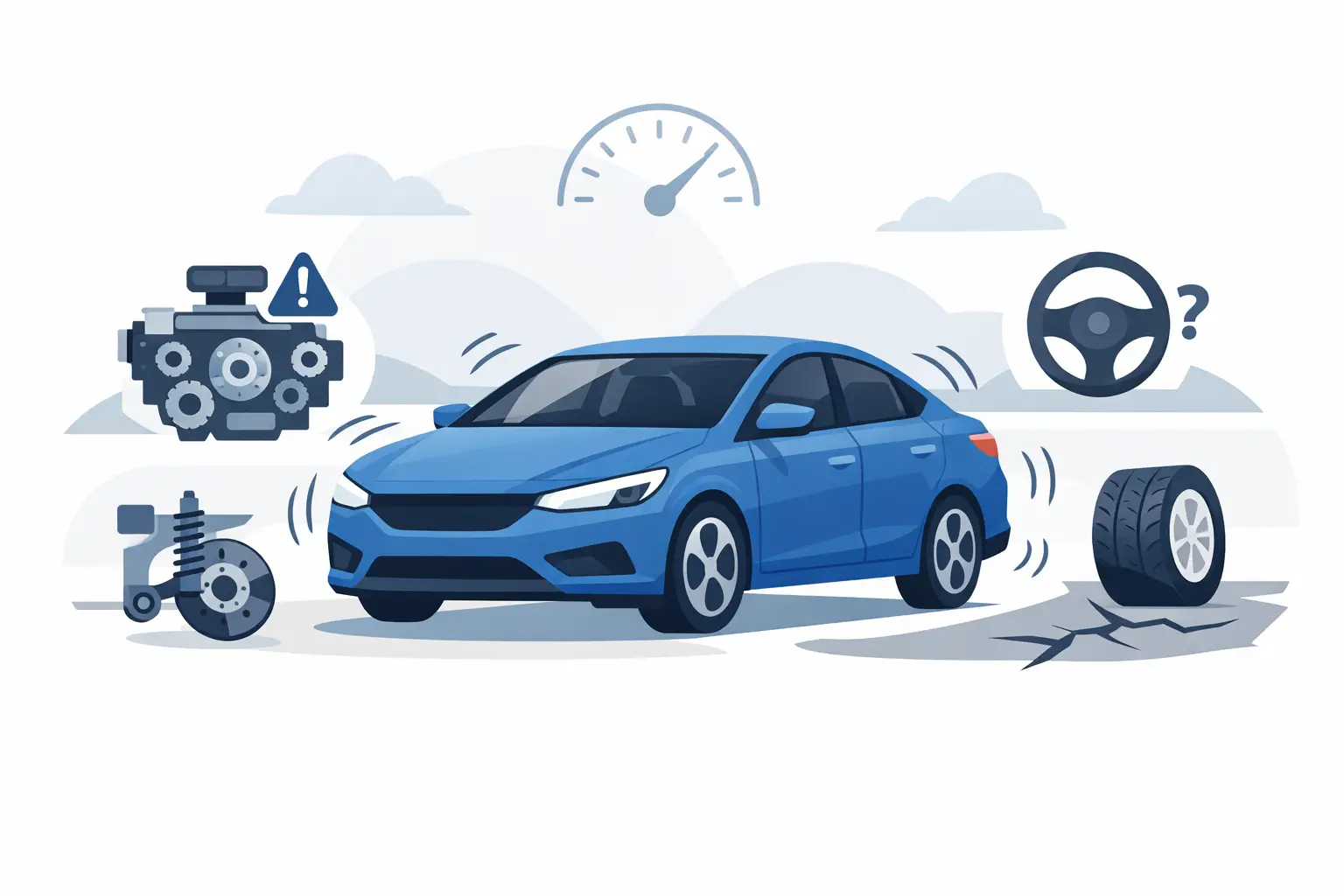
Why Is My Car Shaking? Common Causes

You notice it at the lights, on the freeway, or when you touch the brakes - and the question comes quickly: why is my car shaking? A shaking car is never something to brush off. Sometimes the fix is simple, like a wheel balance. Other times it points to a safety issue such as worn suspension, brake problems or an engine fault that needs proper diagnosis.
The main thing is to pay attention to when the shaking happens. A car that vibrates at idle tells a different story from one that shakes only at 100 km/h or under braking. That pattern helps narrow down the cause and can save time and money when it comes to repairs.
Why is my car shaking at certain speeds?
If the vibration shows up mostly at suburban or highway speeds, wheels and tyres are often the first place to look. An unbalanced wheel can cause a noticeable shake through the steering wheel or seat, especially as speed increases. Tyres can also develop uneven wear, flat spots or internal damage, and all of those can make the vehicle feel unsettled on the road.
A bent wheel is another possibility, especially if the car has hit a pothole, kerb or rough road. In Newcastle and surrounding areas, poor road surfaces can take a toll over time, particularly on daily drivers and 4WDs. Even if the damage is not obvious at a glance, a wheel or tyre issue can make the car shake more the faster you go.
Wheel alignment can play a part too, although alignment usually causes pulling and uneven tyre wear more than a direct vibration. Still, these problems often come together. If your tyres are wearing badly because the alignment is out, the resulting tyre wear can eventually lead to shaking.
Driveline faults can also show up at speed. On front-wheel drive and all-wheel drive vehicles, worn CV joints or driveshaft issues may cause vibration under acceleration. Rear-wheel drive vehicles can develop similar symptoms through tailshaft or coupling problems. These are not jobs to guess at. A proper inspection matters because replacing the wrong part gets expensive quickly.
Why is my car shaking when I brake?
If the car feels fine until you hit the brake pedal, the braking system is the likely culprit. Brake shudder is commonly caused by worn or uneven brake discs, poor pad contact, or wear in suspension components that only becomes obvious under braking.
Many drivers describe this as a wobble through the steering wheel or a pulsing feeling through the pedal. That does not always mean the discs are "warped" in the way people often say, but it does mean something in the braking setup is not working as it should. Brake pads may be worn unevenly, calipers may not be applying pressure evenly, or the discs may have thickness variation.
There is a safety angle here. If your car is shaking under brakes, stopping distances and control can be affected, especially in wet conditions or during an emergency stop. It is worth getting checked sooner rather than later.
Shaking at idle or when stopped
When a car vibrates while parked or idling at the lights, the issue often sits with the engine rather than the wheels. A rough idle can come from worn spark plugs, ignition coil problems, fuel system faults, air intake issues or sensor faults. If one cylinder is not firing properly, the engine can feel lumpy and the whole car may shake.
Engine mounts are another common cause. These mounts hold the engine in place and absorb vibration. When they wear out or crack, normal engine vibration can transfer into the cabin far more than it should. That can make the car feel harsh at idle even if the engine itself is running reasonably well.
On some vehicles, especially higher kilometre cars, the answer can be a combination of smaller issues rather than one major failure. A slightly rough-running engine plus tired mounts can produce a noticeable shake. This is why a proper diagnosis is more useful than replacing parts based on a guess.
If the steering wheel shakes, pay attention
A shake through the steering wheel usually points toward the front end of the vehicle. Front tyres, front wheel balance, brake components, steering joints and suspension wear all deserve a close look.
If the vibration is mostly felt through the seat or floor, it can suggest a rear wheel or tyre issue, though that is not a hard rule. Some faults travel through the whole body of the car, especially on larger vehicles and 4WDs.
Steering and suspension wear matters because it can turn a small shake into a bigger handling problem. Worn tie rod ends, ball joints, control arm bushes or shock absorbers may not just cause vibration - they can also affect stability, tyre wear and braking performance. If the vehicle feels loose, wanders on the road or knocks over bumps as well as shaking, those clues point to front end wear.
What causes shaking under acceleration?
When the car is smooth while cruising but starts shaking as you accelerate, the fault often lies in the driveline or engine performance. A worn CV joint, damaged driveshaft, failing engine mount or misfire under load can all create this sort of symptom.
Automatic transmission issues can also be part of the picture. Some cars develop shudder when changing gears or locking up the torque converter. That can feel similar to a tyre vibration, but it tends to happen at very specific speeds or during gear changes rather than all the time.
For manual vehicles, clutch problems can sometimes cause shudder when taking off. If the car shakes badly as you release the clutch, particularly on hills, the clutch assembly or related components may need attention. It depends on the vehicle and the exact symptom, but it is another case where the timing of the shake tells you a lot.
Tyres are a common cause - but not the only one
Tyres are often blamed first, and sometimes that is right. They are one of the most common reasons a car shakes. But there is a difference between a tyre balance issue and a tyre that is actually unsafe.
A tyre with uneven wear, sidewall damage, a bulge, separated internal belts or low pressure can all cause vibration. Some of these faults are not just uncomfortable - they increase the risk of a blowout or sudden loss of handling. If you can see obvious tyre damage, do not keep driving on it.
That said, not every shaking problem comes down to tyres. We regularly see cars with multiple contributing issues, especially older vehicles or recently purchased second-hand cars. A tyre vibration can mask a suspension problem, or a brake shudder can be made worse by worn front end components. Fixing the visible symptom without checking the rest of the vehicle can leave the real issue behind.
Can I keep driving if my car is shaking?
It depends on how severe the shaking is and when it happens, but the safe answer is not to ignore it. Mild vibration from a wheel balance issue may not leave you stranded today, but it can wear tyres faster and put extra strain on suspension parts. More serious causes, such as brake faults, steering wear or damaged tyres, should be treated as urgent.
If the shaking starts suddenly, gets worse quickly, comes with warning lights, or is paired with noises, poor braking or hard steering, stop driving and have it inspected. The same applies if the vehicle feels unstable at speed.
Waiting can turn a smaller repair into a bigger one. A worn tyre can damage suspension components. A misfire can lead to further engine trouble. A brake issue can affect rotors, pads and calipers together. Early diagnosis is usually the cheaper option.
What to tell your mechanic
If you are booking the car in, the best thing you can do is describe exactly when the shaking happens. Mention whether it occurs at idle, while accelerating, at a certain speed, under brakes, or only on rough roads. Also mention any pulling, noises, warning lights or recent impacts with potholes or kerbs.
That information helps narrow the fault down faster. At Scott Forbes Automotive, that sort of practical detail makes it easier to inspect the right systems first and avoid wasting time.
The right fix starts with the right diagnosis
There is no single answer to why is my car shaking because the symptom can come from tyres, brakes, suspension, steering, engine performance or driveline wear. Some causes are minor. Some affect safety straight away. The difference is in how and when the vibration shows up.
If your car is shaking, do not wait for it to sort itself out. Cars rarely get better on their own. A proper inspection can tell you whether you are dealing with a straightforward fix or something that needs urgent attention, and that gives you a clear path forward with no guesswork.


Comments