

Engine Repairs: Act Before a Small Fault Grows
A strange noise at idle, a warning light that stays on, or a car that suddenly feels flat on the way to work can all point to engine trouble. Engine repairs are rarely something to put off and hope will disappear. Finding the cause early can often mean the difference between a straightforward repair and major damage that keeps your car off the road.
For drivers around Wallsend, Maryland and Newcastle, the sensible approach is simple: pay attention to changes in how your vehicle starts, runs, sounds and uses fuel. Then have a qualified mechanic inspect it before the fault has a chance to affect other parts of the engine.
When Does Your Car Need Engine Repairs?
An engine does not always fail without warning. Modern vehicles have sensors that can identify many issues early, but the warning signs still need to be taken seriously. The check engine light is an obvious one, particularly if it begins flashing. A flashing light can indicate a misfire severe enough to damage the catalytic converter, so it is best to stop driving and arrange an inspection.
Other symptoms can be less dramatic. You may notice rough idling at traffic lights, hesitation when accelerating, reduced power while towing or carrying a load, excessive smoke from the exhaust, or fuel use that has climbed without explanation. Knocking, tapping or rattling noises also warrant prompt attention, especially if they change with engine speed.
Oil or coolant loss is another common reason to book in. A few drops on the driveway may be caused by a minor leak, but oil and coolant are essential to protecting the engine. Low oil can accelerate internal wear, while low coolant can lead to overheating. Neither is a problem to leave until the next service.
Why Accurate Diagnosis Comes First
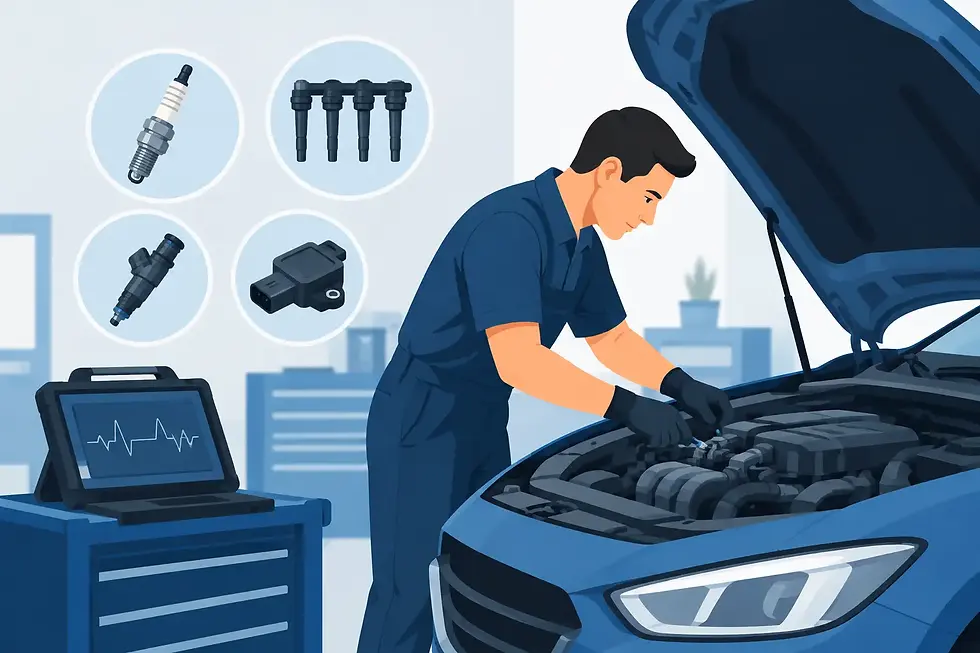
The same symptom can have several possible causes. A rough-running engine, for example, could be linked to worn spark plugs, a failing ignition coil, an air leak, dirty fuel injectors, a sensor fault or a more serious mechanical issue. Replacing parts based on a guess is an expensive way to repair a car.
A proper diagnosis starts with listening to the customer and checking the basics. This includes fault-code scanning where appropriate, visual inspection, fluid checks, battery and charging checks, and testing relevant systems. Depending on the symptoms, further checks may include compression testing, cooling-system pressure testing or inspection of ignition and fuel components.
This process matters because it gives you a clear picture of what needs attention now and what can be monitored. Good advice should explain the fault in plain language, outline the repair options and provide an estimate before work begins. There are times when a repair is urgent for safety or to prevent damage, and other times when you can plan the work around your budget. The difference comes down to an accurate assessment.
Common Engine Repair Issues
Many engine faults are repairable without replacing the entire engine. The right solution depends on the vehicle, its age, kilometres travelled, service history and the condition of related parts.
Cooling system faults and overheating
An overheating engine needs quick attention. Causes can include a coolant leak, split hose, faulty thermostat, worn water pump, radiator issue or cooling fan fault. Continuing to drive while the temperature gauge is high can damage the head gasket or warp engine components.
If the temperature warning comes on, pull over safely, switch the engine off and let it cool. Do not remove the radiator cap while the engine is hot. Arrange for the vehicle to be checked rather than repeatedly topping up coolant and driving on.
Oil leaks, oil pressure and internal wear
Oil leaks can come from seals, gaskets, the sump or other engine components. Some leaks are minor, but any leak that lowers the oil level or reaches hot exhaust parts should be dealt with promptly. An oil pressure warning light is more serious. Stop the engine as soon as it is safe to do so, as running with low oil pressure can cause severe internal damage in a short time.
Regular oil and filter changes are one of the best ways to reduce avoidable engine wear. Using the correct oil specification is just as important as changing it on schedule, particularly in newer petrol, diesel and turbocharged vehicles.
Misfires and poor performance
Misfires often feel like a shudder, uneven idle or lack of power under acceleration. Ignition parts such as spark plugs and coils are common culprits in petrol vehicles, while fuel delivery, intake and sensor faults can also be involved. Diesel engines have their own set of possible causes, including injector and air-system concerns.
The fix may be relatively simple, but ignoring a misfire can create further problems. Unburnt fuel can damage exhaust components, and persistent poor running can place extra strain on the engine.
Timing belt and timing chain concerns
Timing components keep the engine’s internal parts moving in the correct sequence. A timing belt must be replaced at the manufacturer’s recommended interval. Leaving it too long is a gamble that can result in extensive engine damage if the belt breaks.
Timing chains are designed differently and do not usually have a fixed replacement interval, but they can still wear or develop tensioner issues. Rattling on cold start, fault codes and poor running may need investigation. Whether your vehicle has a belt or chain, checking the service schedule is far cheaper than dealing with a failure.
Repair, Rebuild or Replace?
Not every engine problem calls for major work. A leaking gasket, failed coil, cooling-system component or sensor fault can often be repaired efficiently once diagnosed. Even when the repair is more involved, the best option is not always the cheapest quote at the start.
For significant internal damage, the choices may include repairing the affected components, rebuilding the engine or fitting a replacement unit. The practical decision depends on the vehicle’s overall condition and value, the availability of parts, and how long you plan to keep it. A well-maintained 4WD, family car or work vehicle may justify more extensive work. On an older car with multiple issues, a frank discussion about costs is essential.
At Scott Forbes Automotive, the focus is on giving local drivers straightforward information before they commit to repairs. That means identifying the issue, explaining what is involved and helping you make a decision that suits the vehicle and your circumstances.
Can Servicing Prevent Major Engine Problems?
Servicing cannot prevent every fault, but it catches many of the conditions that lead to expensive engine repairs. During routine servicing, a mechanic can identify low or contaminated fluids, worn belts, leaks, cooling-system concerns, battery and charging issues, and early signs of poor engine performance.
Log book servicing is particularly worthwhile for newer vehicles because it follows the manufacturer’s required schedule and helps protect statutory warranty coverage. For older vehicles, a regular service plan based on how and where the car is used is just as valuable. Short trips, heavy traffic, towing, dusty roads and frequent stop-start driving can all be harder on an engine than steady highway kilometres.
Keep an eye on your dashboard warnings between services and check fluid levels if you are comfortable doing so. If something changes, do not wait for the next scheduled visit. A quick inspection can prevent a minor issue from becoming a far larger repair.
What to Do When a Warning Light Appears
A steady check engine light does not always mean you need to stop immediately, but it does mean the vehicle should be assessed soon. Note when the light came on and whether there are other symptoms such as rough running, smoke, loss of power or unusual noises.
If the light is flashing, the engine is overheating, oil pressure is low, or the vehicle is making a loud mechanical noise, stop driving when safe. Continuing to drive can turn a repairable fault into a costly one. If you are unsure, it is always safer to ask for advice before heading back onto the road.
Your car does not need to be making a dramatic noise before it deserves attention. Booking an inspection when the first signs appear gives you more repair options, more control over costs and a better chance of keeping your vehicle reliable for the trips that matter.

Comments