
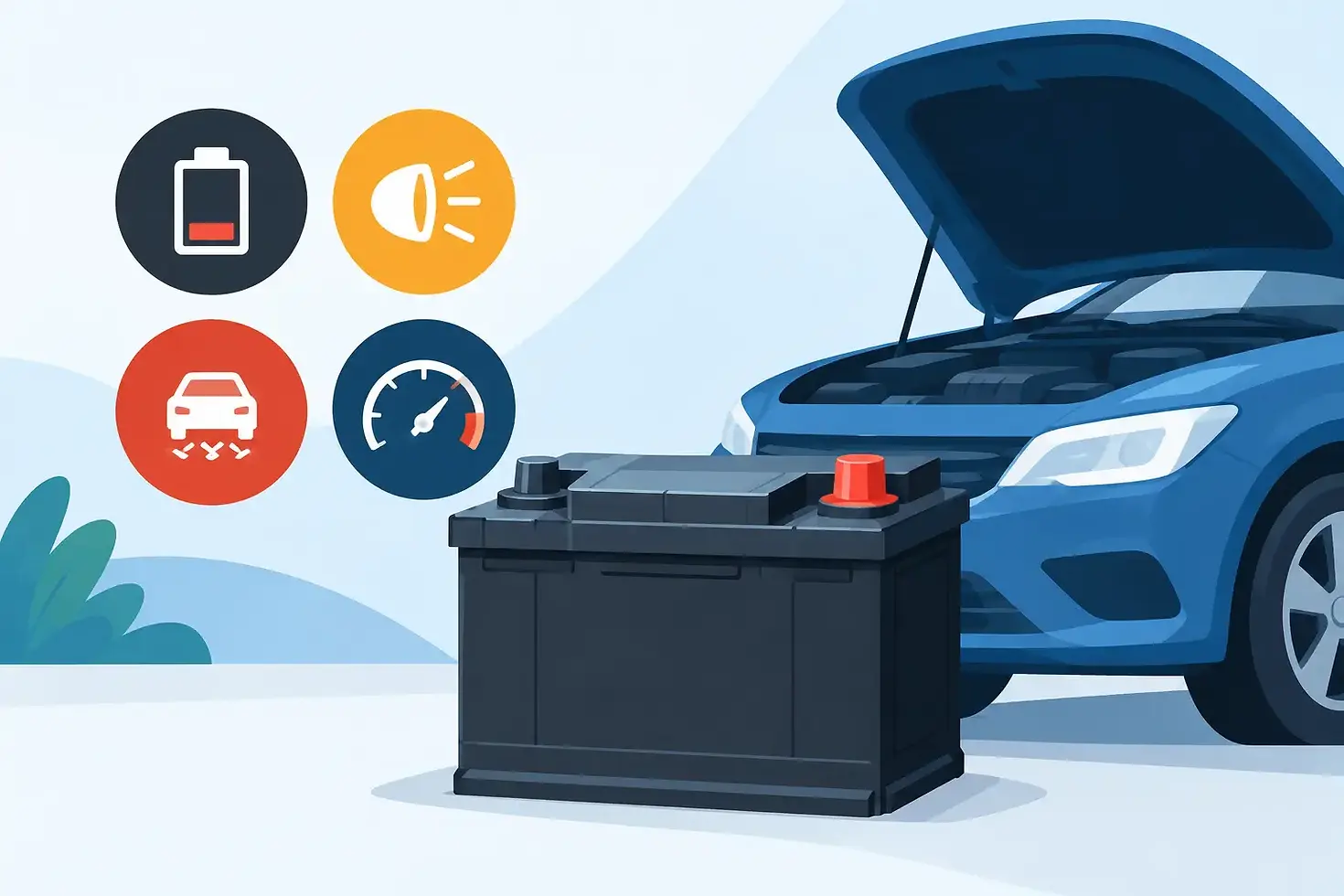
Car Batteries and the Signs They Need Replacing

A car that will not start at home is frustrating. A car that will not start after work, on a school run or before a weekend away is worse. Car batteries are easy to overlook because they generally do their job quietly, but they are central to starting the engine and keeping many electrical systems operating properly.
In Newcastle conditions, heat, short trips, stop-start driving and a busy family schedule can all shorten battery life. The best time to deal with a weak battery is before it leaves you stranded, not when you are waiting for a jump-start in a car park.
What car batteries actually do
In petrol, diesel and hybrid vehicles, the battery supplies the high burst of power needed to crank the engine. Once the engine is running, the alternator recharges the battery and provides power to the vehicle's electrical systems.
The battery also supports features that continue to draw power when the engine is off. Depending on the vehicle, this can include the alarm, central locking, clock, infotainment memory, dash cameras and electronic control modules. Modern vehicles have more electrical equipment than older cars, so choosing and fitting the correct battery matters more than many drivers realise.
EVs are different. They have a high-voltage traction battery that drives the vehicle, but they also use a conventional 12-volt battery for accessories and control systems. If that 12-volt battery becomes weak, an EV can still have trouble waking up or operating correctly, even when its main battery has plenty of charge.
Signs your car battery may be failing
A slow or laboured start is one of the most common warnings. If the engine cranks more slowly than usual, particularly first thing in the morning, the battery may no longer be holding enough charge. Do not assume it will fix itself after one longer drive.
Dim headlights at idle, an intermittently illuminated battery warning light, electrical accessories behaving strangely or a clock that resets can also point to a battery or charging-system problem. Corrosion around the terminals, a swollen battery case or a noticeable sulphur-like smell need attention promptly. A swollen or leaking battery should not be ignored or handled unnecessarily.
Sometimes the first symptom is complete silence when you turn the key or press the start button. That does not automatically mean the battery is at fault. Loose terminals, a faulty starter motor, an alternator issue, damaged wiring or a parasitic power draw can create similar symptoms. Proper testing is the sensible way to identify the cause before replacing parts.
A jump-start is not a diagnosis
A jump-start can get you moving, but it does not tell you why the battery went flat. If the battery is old, internally damaged or not being charged by the alternator, the problem is likely to return. Repeated jump-starting can also mask an issue that needs repair.
If your vehicle starts after a jump-start, arrange a battery and charging-system check as soon as practical. This is particularly worthwhile before a long drive, a holiday trip or a registration inspection.
How long should a battery last?
There is no fixed replacement date, but many car batteries last around three to five years. Some last longer, while others fail earlier due to their operating conditions and the quality of the battery fitted.
Short trips are hard on batteries because the engine may not run long enough for the alternator to fully replace the power used at start-up. Vehicles that sit unused for extended periods can also lose charge through normal electrical draw. Hot weather accelerates chemical wear inside a battery, while cold mornings can expose a battery that was already near the end of its life.
A battery's age is only part of the picture. A two-year-old battery that has been repeatedly flattened may be less reliable than a four-year-old battery that has been regularly driven and maintained. Testing gives a clearer answer than age alone.
Choosing the right replacement battery
Car batteries are not one-size-fits-all. The correct replacement needs to suit the vehicle's physical battery tray, terminal layout, voltage, cold cranking amps and reserve capacity. The wrong battery may not fit securely, may have terminals in the wrong position or may not provide enough starting power.
Vehicles with stop-start technology usually require a specific type of battery, commonly AGM or EFB. Fitting a standard flooded battery in a stop-start vehicle can lead to poor performance and a shortened battery life. Some later-model vehicles also need the new battery registered or reset through diagnostic equipment so the charging system can manage it correctly.
For a 4WD, work vehicle or car running extra accessories such as a fridge, driving lights, winch or dash camera, battery requirements may be different again. More capacity is not automatically better if it does not suit the vehicle's charging system or available space. The right choice depends on how the vehicle is used.
Battery care that makes practical sense
You do not need to constantly monitor your battery, but a few sensible habits can reduce avoidable problems. Keep terminals clean and properly secured, and make sure the battery hold-down bracket is fitted correctly. A battery that moves around can suffer damage and may create an electrical fault.
If you mainly drive short distances, take the vehicle for a regular longer run where practical. For a car, 4WD or ute that is stored or only used occasionally, a quality battery maintainer may help preserve charge. This is useful for vehicles that sit for weeks, but it will not restore a battery with an internal fault.
Avoid leaving accessories running with the engine off for long periods. Interior lights, chargers, portable fridges and dash cameras can drain a marginal battery faster than expected. If a battery repeatedly goes flat after being charged, have the vehicle checked rather than assuming a new battery is the only answer.
When to book a battery test
Book a check if the vehicle is slow to start, the battery is more than three years old, warning lights appear, or it has needed a jump-start. It is also wise to test the battery before heading away, buying a used car or relying on a vehicle that has been sitting unused.
A proper assessment should check more than battery voltage. Voltage can look acceptable when a battery has little real capacity left. Load testing and charging-system checks help confirm whether the battery can perform under demand and whether the alternator is charging it correctly.
At Scott Forbes Automotive, qualified mechanics can test the battery, inspect terminals and charging performance, and supply and fit a suitable replacement where needed. That means you get a practical answer based on the vehicle, not a guess based on a flat battery.
Do not wait for the no-start moment
A battery rarely fails at a convenient time. If starting has changed, electrical faults have appeared or the battery is reaching the age where failure becomes more likely, arrange a check while the vehicle is still mobile. A straightforward test now can save a missed appointment, a tow truck call-out and a much more inconvenient day later.

Comments