

How to Fix Engine Misfire Before It Costs More
A misfire is not just an annoying shudder at the lights. When an engine cylinder fails to burn fuel properly, the vehicle can lose power, use more fuel and potentially damage expensive components. If you need to fix engine misfire symptoms, acting early is usually the difference between a straightforward repair and a larger bill.
Some faults are simple, such as worn spark plugs. Others need proper testing to find, especially on modern vehicles with multiple sensors, direct injection and computer-controlled ignition systems. The sensible approach is to recognise the warning signs, avoid guessing with parts, and have the fault diagnosed correctly.
What an engine misfire actually means
Your engine relies on four things working together: the right amount of air, the right amount of fuel, a strong spark or compression ignition, and sufficient compression inside each cylinder. A misfire occurs when one or more cylinders do not complete that combustion process properly.
In a petrol vehicle, the fault is commonly related to ignition, fuel delivery, air leaks or engine condition. Diesel vehicles do not use spark plugs for combustion, but they can still misfire because of injector, glow plug, air intake, compression or fuel-system faults.
The engine management system may identify the affected cylinder and switch on the check engine light. That is useful information, but it is not a full diagnosis. A fault code points a technician towards the system that needs testing. It does not automatically prove which part has failed.
Signs you need to fix an engine misfire
Misfires do not always feel the same. A small intermittent misfire may only show up when accelerating up a hill or towing. A more serious fault can make the whole car shake at idle.
Common signs include rough idling, hesitation when taking off, reduced power, poor fuel economy and a noticeable vibration through the steering wheel or seat. You may also hear popping from the exhaust, smell unburnt fuel, or find the engine light has come on.
A flashing check engine light is more urgent than a steady one. It can mean unburnt fuel is entering the exhaust system and overheating the catalytic converter. Pull over safely, switch the engine off if the vehicle is running badly, and arrange an inspection rather than continuing to drive it.
Common causes of engine misfires
Worn spark plugs, ignition coils and leads
For petrol cars, ignition faults are among the most common reasons for a misfire. Spark plugs wear over time, their gaps increase, and deposits can build up on the electrodes. A plug may work reasonably at idle but fail when the engine is under load.
Many modern vehicles use an individual ignition coil for each cylinder. A weak coil can cause an intermittent fault that becomes more obvious in wet weather, during hard acceleration or once the engine is hot. Older vehicles may use ignition leads, which can crack or leak spark energy.
Replacing spark plugs at the correct service interval matters. The correct plug type, heat range and gap are just as important. Fitting the wrong parts can create a fresh problem rather than fix the original one.
Fuel injector and fuel supply problems
A cylinder needs a clean, accurately metered fuel supply. Dirty or sticking injectors can affect the spray pattern and fuel quantity, causing rough running and hesitation. A failed injector, restricted fuel filter, weak fuel pump or wiring issue can produce similar symptoms.
Fuel faults should be tested rather than assumed. An injector issue may look like an ignition misfire, and replacing coils or plugs without checking the fuel system can waste time and money.
Air leaks and intake faults
Engines calculate fuel delivery based on the air entering the intake. If air enters through a split hose, leaking intake gasket or faulty breather system, the mixture can become too lean. This is often most noticeable at idle, where the engine may hunt, shake or stall.
Problems with airflow sensors, throttle bodies and turbo intake plumbing can also affect combustion. On a 4WD or a vehicle used on dusty roads, blocked filters and damaged intake hoses deserve a close look.
Mechanical and timing issues
Not every misfire is electrical. Low compression from worn piston rings, valve problems or a damaged head gasket can cause a persistent misfire in one cylinder. Timing belt or timing chain faults can affect several cylinders and may be accompanied by hard starting, rattles or major power loss.
These faults require proper mechanical testing. Continuing to drive with a timing or compression issue can make the damage worse, so this is not the time for trial-and-error repairs.
Safe checks before booking the car in
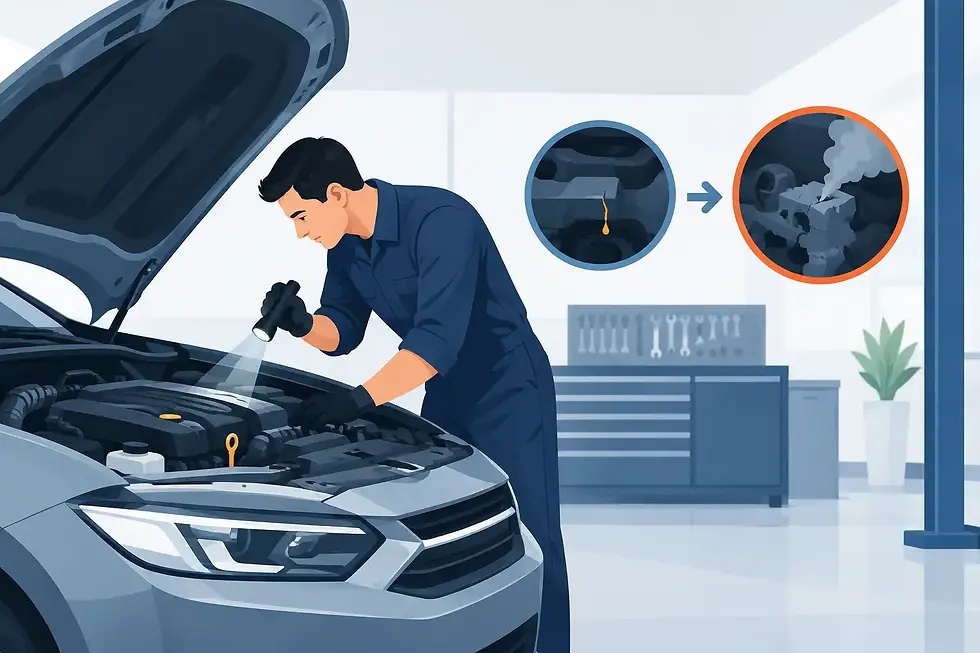
There are a few sensible checks an owner can make without pulling the engine apart. Check whether the engine light is steady or flashing, note when the fault occurs, and look for obvious loose hoses or damaged wiring under the bonnet once the engine has cooled.
Think about recent work as well. Did the misfire begin after a service, a flat battery, filling up with fuel, heavy rain or an overheating event? Useful details like these can shorten the diagnostic process.
Do not remove ignition components while the engine is running, spray flammable products around a hot engine, or keep driving in the hope the issue clears itself. Clearing fault codes with a scan tool may turn off the warning light temporarily, but it does not repair the cause and can remove useful diagnostic information.
How a workshop diagnoses a misfire properly
To fix engine misfire faults properly, a qualified technician starts by confirming the symptom and scanning the vehicle for stored fault codes and live data. This can show which cylinder is affected, whether the fault is current or intermittent, and whether the fuel mixture is running lean or rich.
From there, testing may include checking spark plug condition, swapping or testing ignition coils, inspecting wiring, measuring fuel pressure and testing injector operation. If the basic systems check out, compression and leak-down tests can identify internal engine concerns. Smoke testing may be used to find intake leaks that cannot be seen easily.
This process matters because the same symptom can have several causes. A code for a cylinder misfire does not necessarily mean that cylinder's coil is faulty. It may be an injector, a vacuum leak near that cylinder, poor compression or even a wiring fault.
The repair depends on the cause
Once testing identifies the problem, the repair should be straightforward and explained clearly. It may involve replacing worn plugs and coils, repairing a hose or electrical connection, cleaning or replacing an injector, or carrying out a more involved mechanical repair.
There are trade-offs with parts. Quality aftermarket components can be suitable for some vehicles, while others are better repaired with genuine or original-equipment parts, particularly where ignition, sensors or injectors are concerned. A good workshop will discuss the options, expected cost and any related maintenance that should be done at the same time.
After repairs, the vehicle should be road tested and checked again for fault codes and smooth operation. This is especially important for intermittent faults that may only appear under load.
When not to drive with a misfire
Avoid driving if the check engine light is flashing, the engine is shaking heavily, there is a strong fuel smell, the vehicle has little power, or the temperature gauge is climbing. These symptoms can indicate a problem that may damage the catalytic converter, engine or exhaust system.
If the car is running only mildly rough with a steady warning light, it may be possible to drive carefully to a nearby workshop. Keep revs low, avoid towing or hard acceleration, and do not put off the repair for weeks.
For drivers around Wallsend, Maryland and Newcastle, Scott Forbes Automotive can inspect misfire faults across everyday cars and 4WDs, explain what testing has found, and provide practical repair advice before work goes ahead. A prompt diagnostic booking gives the fault less opportunity to turn into a bigger repair.

Comments