

Cooling System Pressure Test Explained Clearly
A cooling system pressure test explained properly is less about a mechanic pumping up a radiator and more about finding the source of coolant loss before a small problem turns into an overheated engine. If your coolant level keeps dropping, there is a sweet smell after a drive, or the temperature gauge is climbing higher than usual, a pressure test is often one of the quickest ways to get a clear answer.
For drivers around Wallsend, Maryland and Newcastle, this matters particularly in summer traffic, on longer motorway runs or when a loaded 4WD is working harder than usual. Modern engines do not tolerate overheating well. Acting early can mean replacing a hose or clamp rather than dealing with major engine damage.
What is a cooling system pressure test?
Your vehicle’s cooling system is sealed and operates under pressure once the engine reaches temperature. That pressure raises the boiling point of the coolant, allowing it to carry heat away from the engine efficiently. The radiator or coolant reservoir cap controls that pressure at a level specified by the vehicle manufacturer.
During a pressure test, a qualified mechanic fits a hand-operated tester and the correct adaptor in place of the radiator cap or coolant reservoir cap. With the engine cold, the tester brings the system up to its specified pressure. The mechanic then watches whether the pressure holds and inspects the system for coolant escaping.
A healthy sealed system should hold pressure for a reasonable period. If the gauge drops, coolant or pressure is getting out somewhere. The useful part is that the test can expose a leak while the engine is switched off and cool, rather than waiting for it to leak only after a drive.
Why a pressure test is more useful than a quick visual check
Some coolant leaks are obvious. A split hose may leave a puddle under the car, while a damaged radiator can show green, red or white staining around its core. Many leaks, however, are slow, hidden or only appear when pressure builds.
A pressure test helps bring those faults to light. It can reveal seepage at a hose connection, a hairline crack in a plastic radiator tank, a worn water pump seal or a leaking heater hose behind the engine. On some vehicles, coolant can collect under engine covers, in the undertray or in the heater system, so there may be no obvious puddle on the driveway.
The test is also valuable because coolant loss is not always caused by a failed radiator. Replacing parts based on a guess can be expensive and frustrating. Proper diagnosis gives the repair a better chance of fixing the fault the first time.
Common faults a pressure test can help find
A workshop may identify a leaking radiator, deteriorated hose, loose clamp, thermostat housing, coolant reservoir, heater core or water pump during testing. The radiator cap itself can also be the problem. If it cannot maintain its rated pressure or release excess pressure correctly, the system may lose coolant or operate poorly.
On older vehicles, rubber hoses and plastic fittings become brittle from age and heat cycles. On newer cars, compact engine bays and plastic cooling components can make a small leak difficult to spot without testing. The underlying principle is the same across passenger cars, utes and 4WDs: a sealed system needs to remain sealed.
How the test is carried out safely
Cooling systems must only be opened when the engine is cold. Hot coolant is pressurised and can cause serious burns if a radiator or reservoir cap is removed too soon. Do not try to remove a cap after a drive simply because the coolant level looks low.
At a workshop, the mechanic first checks the coolant level, condition and visible components. They select the adaptor that suits the vehicle, then pressurise the system to the manufacturer’s specified cap rating. Applying more pressure than the system is designed for is not good diagnosis and can cause damage.
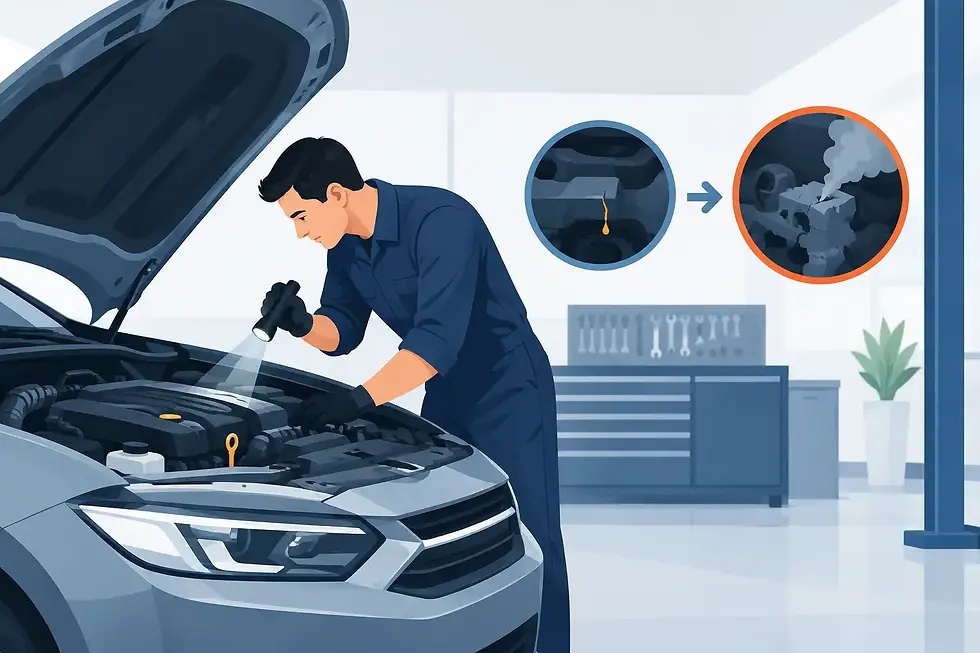
As pressure is applied, the mechanic checks around the radiator, hoses, clamps, water pump, thermostat housing, reservoir, heater lines and other accessible components. A torch, inspection mirror or UV dye may be used where access is tight. If the pressure gauge falls without an external leak being visible, further testing may be needed.
The cap can be tested separately as well. This is worthwhile because it is a relatively inexpensive component but has an important job. A cap that leaks pressure can allow coolant to boil at a lower temperature, while a cap that does not relieve pressure correctly can place extra stress on hoses and radiator tanks.
What the results can mean
If the system holds pressure and no coolant is found escaping, that is a useful result, but it does not automatically rule out every cooling fault. Some problems only occur when the engine is hot, when a thermostat opens, when the cooling fan should engage or under driving load.
If pressure drops and coolant is visible externally, the repair path is usually straightforward. The leaking component should be replaced or repaired, the system refilled with the correct coolant mixture, and air bled from the system where required. The system should then be rechecked for leaks.
A pressure loss with no visible external leak needs more investigation. Coolant may be leaking into an area that is hard to see, such as the heater core. In some cases, it may be entering the engine through an internal fault. A mechanic may recommend a combustion gas test, cooling fan checks, thermostat testing, inspection for coolant in the engine oil, or other targeted diagnosis depending on the symptoms.
Can a pressure test find a head gasket problem?
Sometimes, but not always. A failed head gasket can allow combustion gases into the cooling system, force coolant out, or allow coolant into a cylinder or oil passage. A pressure test may show a loss of pressure or help identify a related symptom, but it is not a complete head gasket test on its own.
Signs that need prompt professional attention include persistent overheating, white exhaust smoke after the engine has warmed up, unexplained coolant loss, bubbling in the reservoir, a hard cooling hose shortly after cold start, or milky contamination in the oil. These symptoms can have different causes, so testing should guide the repair rather than assumptions.
When should you book a cooling system inspection?
Book an inspection if you are topping up coolant repeatedly, notice a coolant smell, see staining or drips under the vehicle, or find the temperature gauge moving above its normal position. Also take notice if the cabin heater stops blowing hot air, as this can happen when coolant is low or air is trapped in the system.
Do not keep driving an overheating vehicle in the hope it will settle down. Pull over safely, turn the engine off and allow it to cool. Never pour cold water into a hot engine or open the cooling system while it is pressurised. Towing or arranging advice can be far cheaper than continuing to drive and causing cylinder head or engine damage.
For a car that is due for servicing, it makes sense to mention any coolant loss or temperature concerns before the booking. That gives the workshop the chance to allow time for diagnosis rather than only carrying out a routine check.
Pressure testing is diagnosis, not a shortcut repair
A pressure test is a sensible first step, but the right repair depends on what it finds. A small hose leak may be a straightforward job. A water pump can be more involved, especially where it is driven by the timing belt or located behind other components. Heater core repairs can also vary widely between vehicles because dashboard access differs.
This is why clear advice matters. A good workshop should explain what is leaking, why that part needs attention, whether related parts are worth replacing at the same time, and what can reasonably wait. For example, replacing aged hoses together may make sense if they are all deteriorating, but not every nearby component needs replacing simply because one has failed.
Scott Forbes Automotive can inspect cooling system concerns as part of practical fault-finding and mechanical repair work. The aim is to locate the cause, explain the options plainly and get your car back to reliable running without unnecessary work.
If your coolant level is falling or your engine is running hotter than it should, arrange a check while the fault is still small. Cooling problems rarely improve on their own, and an early pressure test can provide the answer before your next trip becomes an expensive one.
Comments