

Alternator Replacement Guide Australia for Drivers

A battery warning light on the dash does not automatically mean the battery is the problem. If your car starts reluctantly, headlights dim at idle, or electrical accessories begin behaving strangely, the charging system needs checking. This alternator replacement guide Australia is for drivers who want a clear answer before spending money on the wrong repair.
Your alternator keeps the battery charged while the engine is running and supplies power to the vehicle’s electrical systems. Modern cars rely on it for far more than starting: engine management, lighting, air conditioning controls, safety systems, infotainment and, in many vehicles, stop-start operation all depend on stable voltage.
Alternator Replacement Guide Australia: Know the Signs
Alternators rarely fail without some warning, but the signs can overlap with a weak battery, loose wiring or a worn drive belt. That is why a proper test matters.
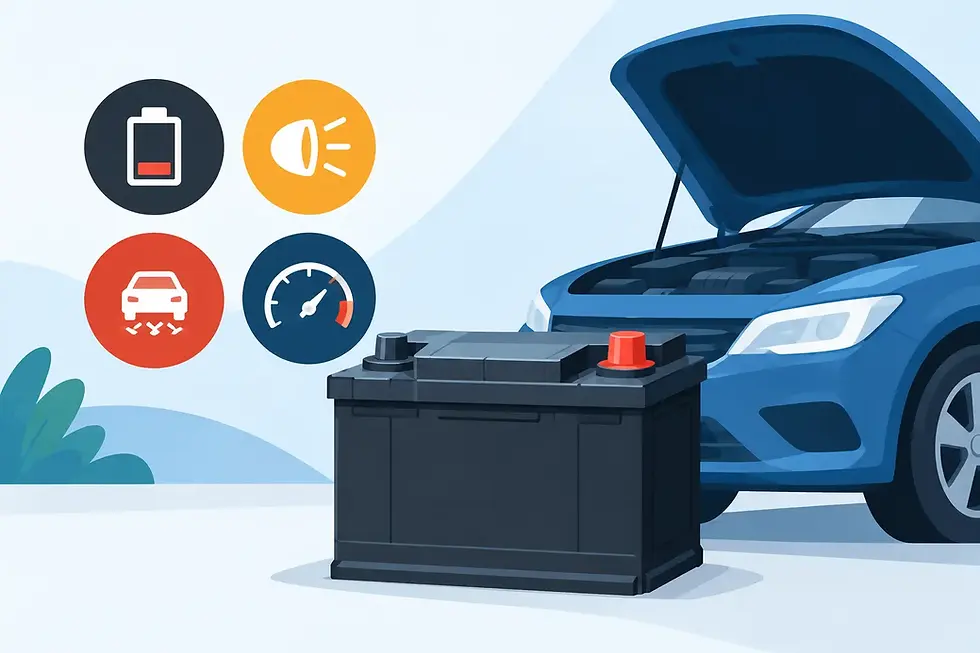
The battery or charging warning light is the most obvious sign. It may come on steadily, flicker over bumps, or appear only when electrical demand is high. Treat it seriously. Once the alternator stops charging, the car is running on stored battery power only. Depending on the vehicle and battery condition, that could mean a short trip or a breakdown well before you reach home.
Slow cranking can also point to a charging issue, particularly if the battery has recently been replaced but continues to go flat. Dim headlights at idle that brighten when the engine revs, a noisy blower fan, erratic dashboard displays and power windows that operate slowly can all suggest low system voltage.
Listen for noises as well. A failing alternator bearing may produce a whine, growl or grinding sound from the belt area. A loose or worn serpentine belt can squeal, especially on start-up or when the air conditioning is running. In some cars, a burning rubber smell may be caused by belt slip rather than the alternator itself.
These symptoms are not a reason to guess. A battery can fail internally, terminals can corrode, cables can develop resistance and some vehicles have battery-monitoring systems or smart alternators that need more detailed diagnosis.
What an Alternator Test Should Check
A worthwhile charging-system inspection is more than connecting a voltage meter for a few seconds. Qualified mechanics will check the battery’s state of health, battery terminals and earth connections, belt condition and tension, wiring to the alternator, and charging output under load.
On many conventional vehicles, voltage at the battery with the engine running will be higher than it is with the engine off. However, there is no single reading that confirms every vehicle is healthy. Late-model cars may vary alternator output depending on battery condition, engine load, temperature and fuel-saving strategy. A reading that looks unusual on an older car may be normal on a smart-charging vehicle.
Testing should also consider voltage drop through the positive and earth cables, alternator ripple caused by failed internal diodes, and the effect of loads such as headlights, rear demister and cabin fan. This helps separate an alternator fault from a battery problem or wiring issue.
For Newcastle drivers, this diagnostic step can prevent a common and expensive mistake: replacing the battery after it has gone flat, then finding the new battery is not being charged either.
Can You Keep Driving With a Faulty Alternator?
It depends on the fault, but it is not a repair to put off. If the charge warning light is on while driving, reduce electrical load where safe to do so and arrange a repair as soon as practical. Avoid repeated starts, unnecessary accessories and long trips.
Do not assume the engine will keep running just because it is already started. When battery voltage drops too far, the engine control system, ignition, fuel system and electric power steering can be affected. The vehicle may stall and may not restart. On some models, low voltage can also trigger multiple warning lights that disappear once the charging fault is repaired.
If there is a burning smell, smoke, a loud bearing noise, a damaged belt, or the temperature gauge is rising, stop in a safe place. A failed belt can affect more than charging. Depending on the engine design, it may also stop the water pump from circulating coolant, creating a risk of overheating.
Alternator Replacement or Repair?
The right answer depends on the vehicle, the condition of the alternator and parts availability. Some alternators can be rebuilt with components such as brushes, regulators, bearings or rectifiers. Others are more practical and cost-effective to replace as a complete unit.
A new alternator generally offers the most straightforward option where available, particularly for a car you plan to keep. A quality remanufactured unit can also be a sensible choice when it comes from a reputable supplier and carries an appropriate warranty. The cheapest option is not always the best value if it has poor output, incorrect fitment or short service life.
Parts selection matters. Alternators vary by engine, transmission, vehicle specification and electrical output. A unit that physically bolts on may still be wrong for the vehicle. This is especially relevant for 4WDs, vehicles with extra accessories, and late-model models with computer-controlled charging systems.
During replacement, it is sensible to inspect the drive belt, tensioner, idler pulleys, battery terminals and main charging cables. Fitting a new alternator without addressing a cracked belt or loose connection can leave the underlying problem unresolved.
Why Battery Condition Still Matters
A failing alternator can flatten a healthy battery. The reverse is also true: a failing battery can place extra strain on the charging system and create symptoms that look like alternator trouble.
A battery that has been deeply discharged several times may not recover fully, even after the alternator is repaired. This is common when a vehicle has been driven with the warning light on or has needed repeated jump-starts. After charging-system repairs, the battery should be tested rather than assumed to be fine.
It is also worth checking the age of the battery. In Australian conditions, heat, short trips and stop-start driving can shorten battery life. A vehicle used mainly for short runs around Wallsend, Maryland or Newcastle may not have enough driving time to restore a weak battery after each start.
What Affects Alternator Replacement Cost?
There is no useful one-price-fits-all answer because alternator replacement cost depends on access, vehicle type and the part required. On some cars, the alternator is readily accessible from the top of the engine. On others, it may sit low in the engine bay or require surrounding components to be removed.
The make and model also affect part pricing. A basic alternator for an older passenger car is different from a high-output unit for a diesel 4WD, European vehicle or model with extensive electrical equipment. Labour time, belt or tensioner replacement, battery condition and any wiring repairs can add to the final job.
A clear quote should identify the diagnosis, the parts being supplied and any related work recommended. That gives you the information to decide whether to repair now, replace supporting parts at the same time, or monitor an item that is not yet due.
A Note for Hybrid and EV Owners
Most hybrid and electric vehicles do not use a conventional engine-driven alternator in the same way as a petrol or diesel vehicle. They may still have a 12-volt battery and a DC-DC converter that keeps it charged from the high-voltage system. A flat 12-volt battery in an EV or hybrid can cause no-start conditions and warning messages, but the diagnosis is different.
Do not apply conventional alternator assumptions to these vehicles. They need a technician who understands the vehicle’s low-voltage and high-voltage systems and follows the correct safety procedures.
When to Book a Mechanic
Book the vehicle in promptly if the battery light is on, the battery repeatedly goes flat, you can hear noise around the belt drive, or electrical systems are acting unpredictably. Early testing is usually simpler than dealing with a roadside failure, a flat battery and a missed day of work.
At Scott Forbes Automotive, charging-system faults can be diagnosed alongside the battery, belt drive and related wiring, so the repair is based on the cause rather than a guess. For everyday cars and 4WDs alike, a proper check gives you a clearer path forward and helps keep a small warning light from becoming a bigger inconvenience.
Comments